Contact Igloo

The product

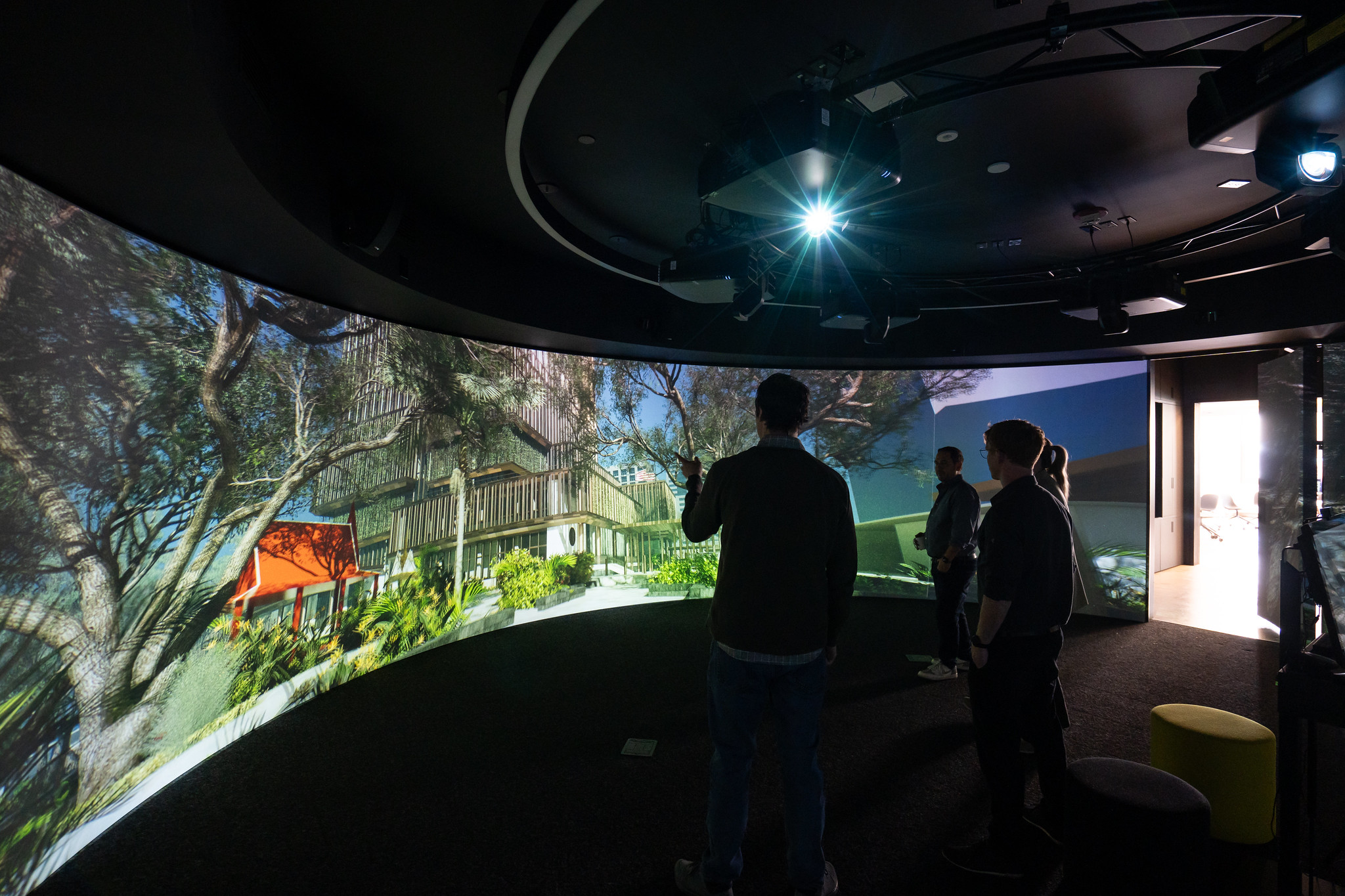
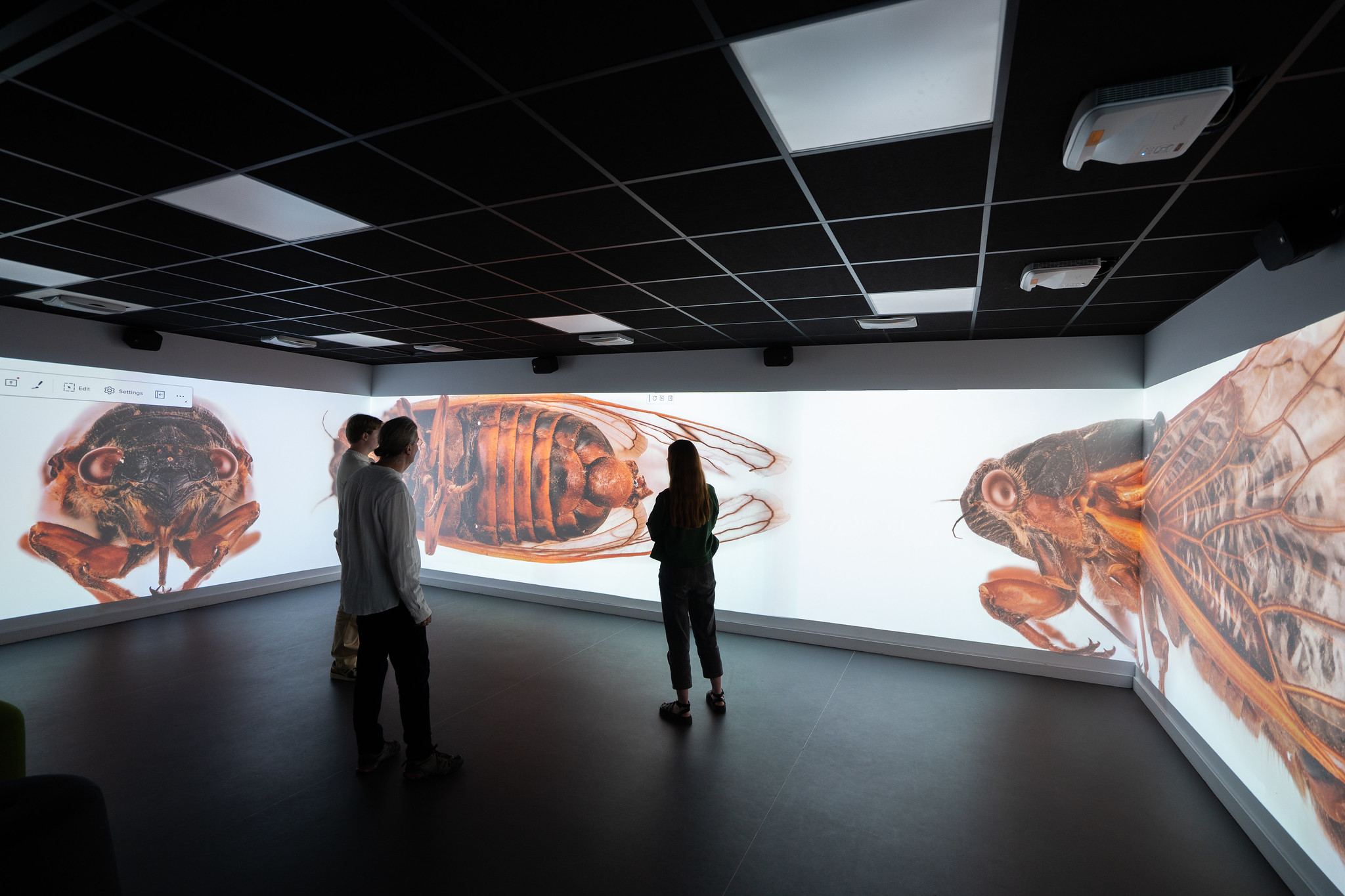
The Igloo Link at KIT is a modular solution comprised of five self-supporting bases, each with its own projection screen. These bases can then be snapped together to create an immersive footprint of KIT's choosing or left as freestanding individual pieces for a more intimate or segmented immersive session that requires content in different places, such as grouped workshops.

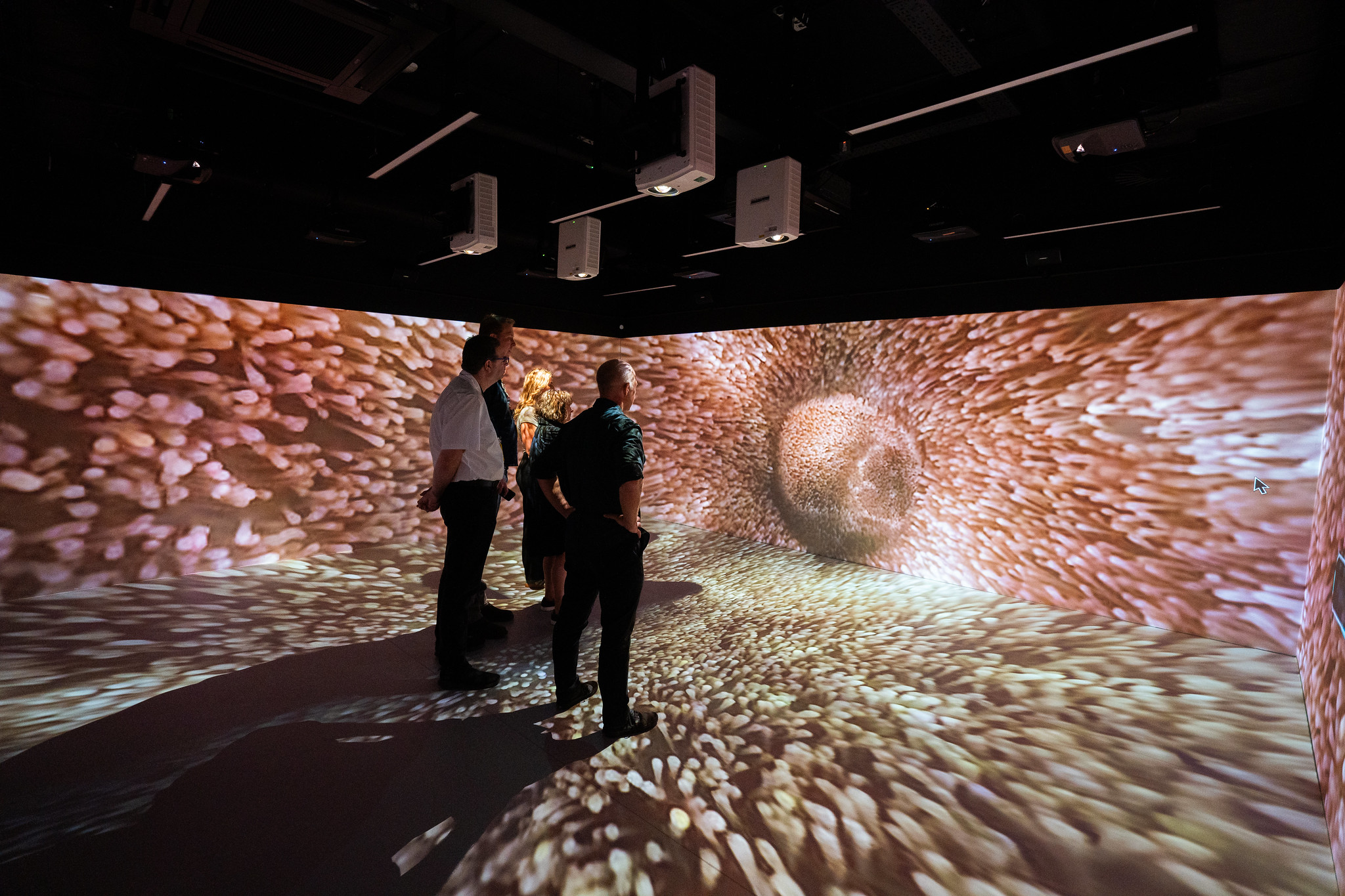
The immersive cube is a 4x4-metre standalone immersive room which provides fully enclosed immersive experiences for KIT. Four Christie Captiva DWU500S projectors provide high-fidelity wall projection, with Digital Projection E-Vision Laser 6110 projectors providing floor projection and maximal immersion. 

The Cube is also fitted with a unique door, allowing for use as a dual-purpose open and closed immersive space, depending on the situation.


“The Link is like an amphitheatre where we can use applications on a very big screen. It's like a cinema experience, but you can also split them up for several things at the same time.  

For example, we have a Miro board on one side of one part of the screens and we have a presentation in the middle or a stream from a virtual reality headset, and also an Unreal 3D application or Unity 3D application on the other part of the screen, and we can also have all the same thing at the same time.” 

Silvio Martin

Project Lead for Sustainable Futures Lab Infrastructure

The result

Since installation, both the Igloo Link and Cube have provided KIT with three primary practical use cases. Firstly, they allow KIT to conduct workshops that show evidence and visualisations of possible solutions, then users can be taken to the Immersive Cube for a full experience of those solutions in play, and finally, it allows for collaborative experimentation within an immersive environment. 

These use cases have led to several key benefits for KIT and the Sustainable Futures Lab as it works towards its goal of sustainable transformations for society: 

  • The Igloo Link allows for interactive, immersive group workshops, bringing heightened engagement and interactivity when compared to traditional 2D methods. 
  • Additionally, by exploring visual simulations, 3D urban planning scenarios, and other innovative methods within an immersive environment, KIT can bridge abstract data and the ‘real-world’ for quicker participant understanding, increased engagement, and bring everyone to a single source of information for greater consistency. 
  • By using the Link and the Cube for experimentation and testing ideas, KIT can effectively reduce the cost associated with real-world experimentation. This is especially useful whenever real-world experimentation takes too long or is not feasible at all, as it avoids the legally complex quagmires that often come with urban redesign.   
  • They can also switch from one location to another quickly. For example, an environmental solution can be tested in Karlsruhe, and then quickly switched to London to see how it performs there. 
  • Unlike traditional VR headsets, the Igloo Cube provides a shared immersive experience, allowing groups to enter together, interact, and communicate in real time, all whilst retaining the face-to-face feedback that is essential to collaborative work. 
  • In addition, this allows external stakeholders to engage with prospective plans and designs more easily, granting greater community involvement and buy-in. The unique winged door of this Cube also enables higher footfall of people through the space.
  • Whilst still early in deployment, KIT intends to use the immersive spaces for project-based student learning, enabling students to simulate future cities, visualise their ideas, and interact with real-world data.  
  • The flexibility granted by Igloo Core Engine, our software platform for immersive spaces, to switch between presentations and collaborative tools like Miro, straight into more specialist programs like Unity and Unreal, is essential to this goal. 


"Other solutions you have the total immersion, but you're alone, you're lost in your own space, there's no communication with other people, and you cannot see the reaction of other people. 

To be in a stakeholder communication with a group in front of your immersive solution, this is a high benefit, and I think that's the big, big benefit of Igloo solutions. That you can bring people together and have them explore the data and experience the data that they have here at KIT. 

Tankred Franco Magg

CEO, IMSYS

Going forward

Looking ahead, KIT sees its immersive spaces playing a central role in sustainable transformation research and education. 

To help achieve this, KIT plans to move the systems to a central city location to make them more accessible for students and policymakers to access and host feedback sessions. 

The team at KIT also intend to produce more custom content by integrating data from wider departments. Current subject areas earmarked for this include civil protection and mobility solutions, such as autonomous driving. 

The long-term vision is to accelerate the pace of innovation within complex systems, enabling faster prototyping, feedback, and ultimately, the implementation of sustainable solutions to respond to societal and climate changes. 

Testimonials

“If you want to describe Link simply, it's five big screens, but this does not do it justice. You can really play with the five screens and have a 180-degree display of possible technologies. And, you can also do that in each link system separately.   

So, it's ideal for doing workshops, where you can have a presentation on one side, charts on the other, a video of a solution on a separate screen, and so on  

It's a really ideal mobile solution to bring it to different places and have a very engaging workshop environment.”  

Daniel Lang

Professor for Real-World Laboratory Design 

“It was a steep learning curve, but now, it's very intuitive to work with. But at the same time, I'm also very happy that Igloo customer service is very quick in answering anything because there were some issues that I could have handled on my own but it would have taken weeks and a lot of learning and it's much easier to call them, tell them the issue and they are in there within 12 to 24 hours to take care of the issue.” 

Silvio Martin

Project Lead for Sustainable Futures Lab Infrastructure 

I think a huge benefit is that it can be used by non-experts; you don't have to have an education in virtual design. The threshold of using it is, from my perspective, not as high as with other systems. 

It also really complements the super abstract that we often have in science, and the very, very concrete and contextualised. In having this in between space that you can really use to bring these worlds together.” 

Daniel Lang

Professor for Real-World Laboratory Design