Contact Igloo

The product

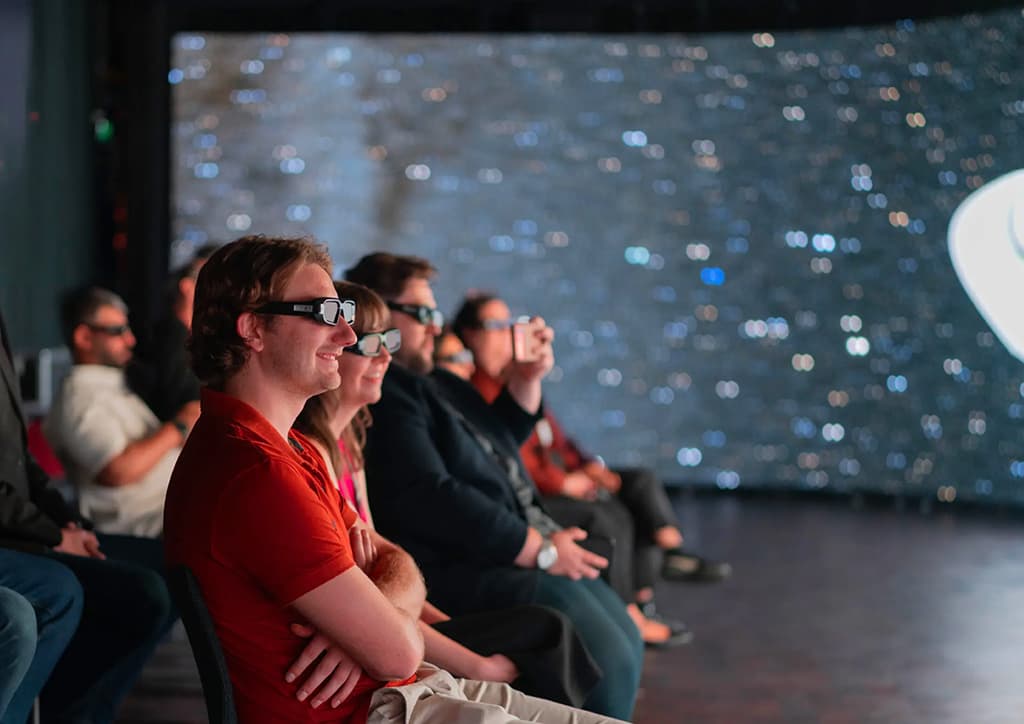
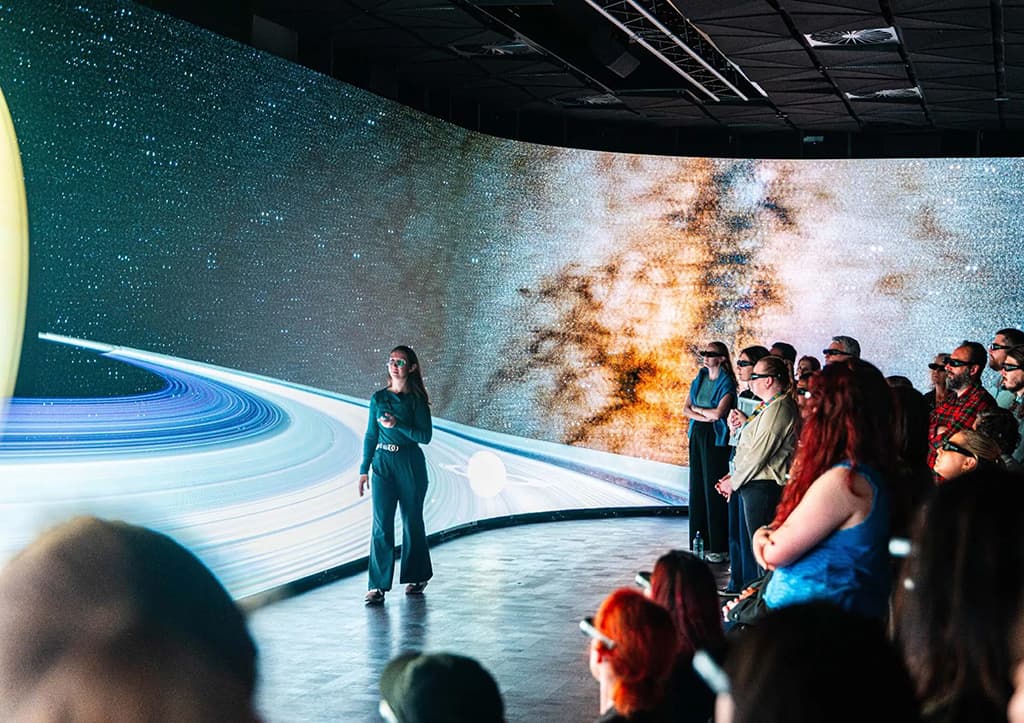
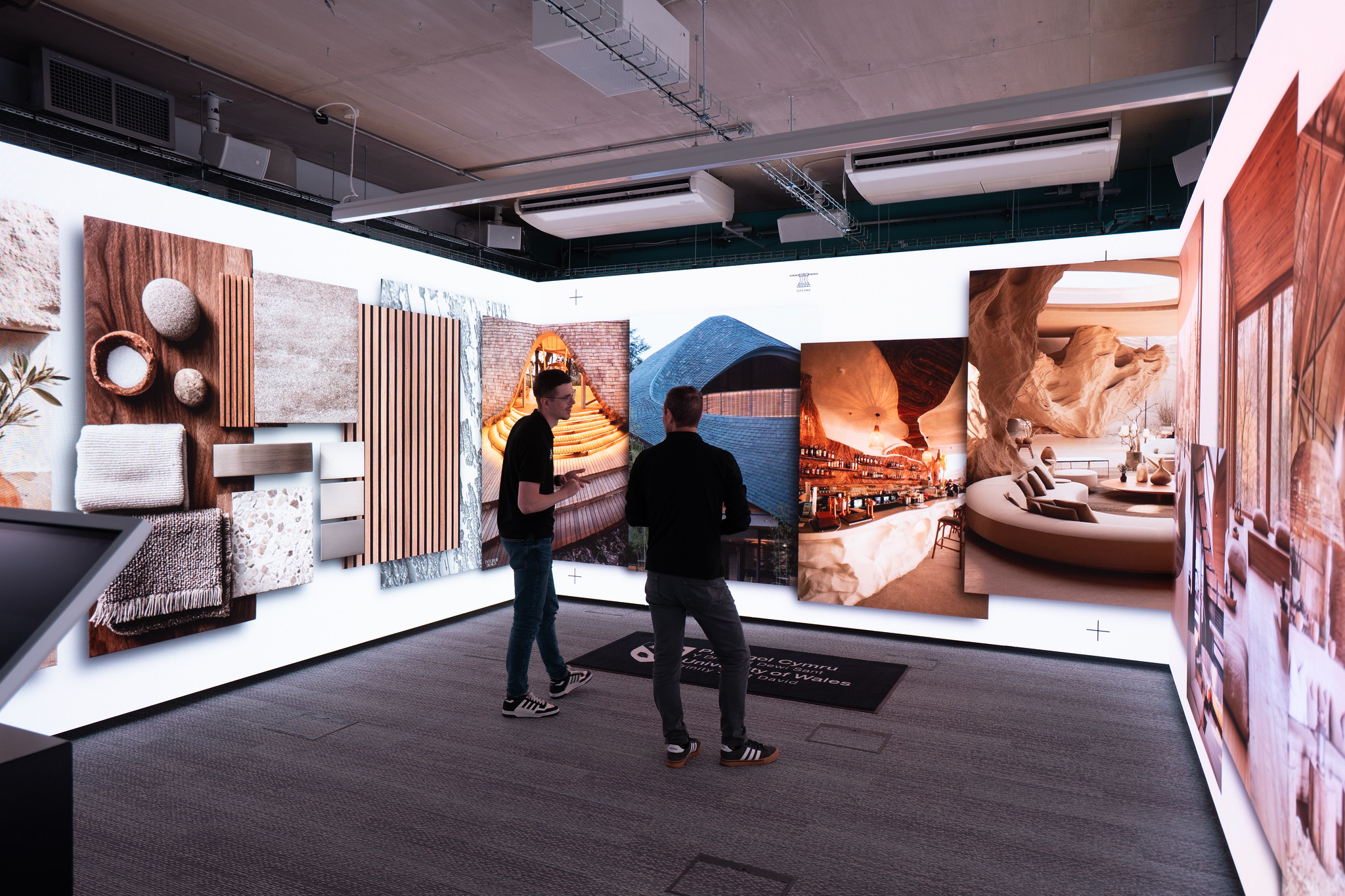
The 30m-wide LED wall includes partial wraparound wings that create an immersive canvas that delivers around 45 million pixels total. The system targets 60Hz per eye with precise shutter-glass timing, high grey-bit depth, scan rates and refresh rates.

3D content is central to the experience, with the need to make the viewing experience as close to real life as possible. In the words of Professor Matthew Bailes, founder of Swinburne’s Astrophysics Group: "We live in a 3D world, so we’re used to as humans having vision everywhere.” LED was therefore required to circumvent the fact that 3D glasses cause a 30% light attenuation.

Multiple content types are also displayed at once, with audio localisation for each content piece as it moves across the screen, giving the perception of each layer truly moving through a 3D environment. Software-enabled support also extends to Office 365, Google Slides, web dashboards, game engines, immersive video, 3D models and more.

To make a multi-purpose space of this kind reliable, repeatable, and even possible in the first place, Swinburne University needed a software platform that would tie it all together. They needed Igloo Core Engine.


"Suddenly Saturn just appears in your peripheral vision, and you realise you’re being lit up by this planet… It’s magical."

Professor Matthew Bailes

Director, Australian Research Council’s Centre of Excellence for Gravitational Wave Discovery

The result

The result, put plainly, is a vastly impressive viewing experience, and one that pushes the envelope of what's possible with visualisation spaces.

When first formulating the plan for the space, the use of individual VR headsets was duly considered. However, the natural barriers that come with closed-off headsets raised questions. As Matthew Bailes puts it: "People get sick. You have no feedback as to whether they’re enjoying it or not when you’re engaging with them; you don’t even know if they’ve got their headset on properly.”

One of the goals of the space was to 'ignite passion', and the Virtual Universe certainly does that - bringing its participants directly into the content in a shared experience, without closing anyone off to the outside world or each other.

Igloo Core Engine is central to turning what is otherwise an, albeit very complex, curved LED screen into a hybrid, multi-use space offering a technological centrepiece at the Melbourne campus. With Igloo Core Engine, the Virtual Universe allows for cutting-edge astrophysics, flexible presentations, virtual production and experiential events to come together in a singular environment.

It also makes the day-to-day operation of the space accessible and intuitive; operators can drag and drop content such as Gaia Sky datasets or 3D Models directly onto the canvas and then mix and match that with other content types such as webpages, live camera feeds, up to 5 other laptop feeds connected via HDMI and more - with complete flexibility on size, scale and positioning.

Additionally, it brings perspective-correct content into the environment at the push of a button, with its True Perspective feature automatically formatting content to fit the dimensions of the space, meaning Swinburne University don't have to painstakingly format every piece of content they want to use.

The audio localisation of each feed was a bespoke element of the environment's design, meaning that when dialogue or audio from a specific part of the environment is emitted, it truly makes the participant feel as though it is coming from where the brain perceives it to be in a 3-dimensional world, further heightening the immersion and cementing this as a best-in-class space.



“This is a place where we want to invite guests in to learn about how the universe works, but it's a multipurpose space, so we'll be running events, we'll be running teaching, and all sorts of things that we haven't imagined yet. 

Carl Knox

Creative Technologist, OzGrav and SVU

Going forward

The multi-purpose nature of the space means that it can continue to grow its use cases as time goes on. There are plans to run events, teaching sessions and more ideas as and when they come.

Whilst the primary use case was always intended to be astrophysics clustering (real-time navigation through massive datasets), it will also remain in casual use by lecturers, students or commercial renters, ensuring the space can extend well beyond its original remit with the hosting of TED Talk-style lectures, musical recitals, art exhibitions, and more, with almost any content being compatible through Igloo Core Engine.

Testimonials

“People can come in and just drag and drop 3D models into the space. They can mix and match that with webpages, movies, up to five laptops on the screen at once.”

James Sheridan

Head of Business Asia Pacific, Igloo Vision

“It's an immersive space; it's not a screen. It's a 3D environment, and it's a place where we can dream about how to ignite passion among everybody who comes in."

Professor Matthew Bailes

Director, Australian Research Council’s Centre of Excellence for Gravitational Wave Discovery

“It's really hard to drive content at this resolution. The philosophy of Igloo is to have a single media server drive it, to make those content workflows so much easier. It's been amazing to be part of an immersive space where you truly feel part of the content, and to feel like you're actually at that location."

James Sheridan

Head of Business Asia Pacific, Igloo Vision