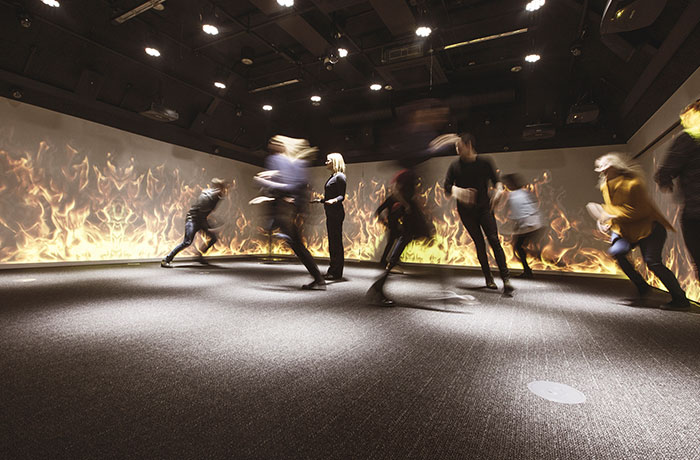
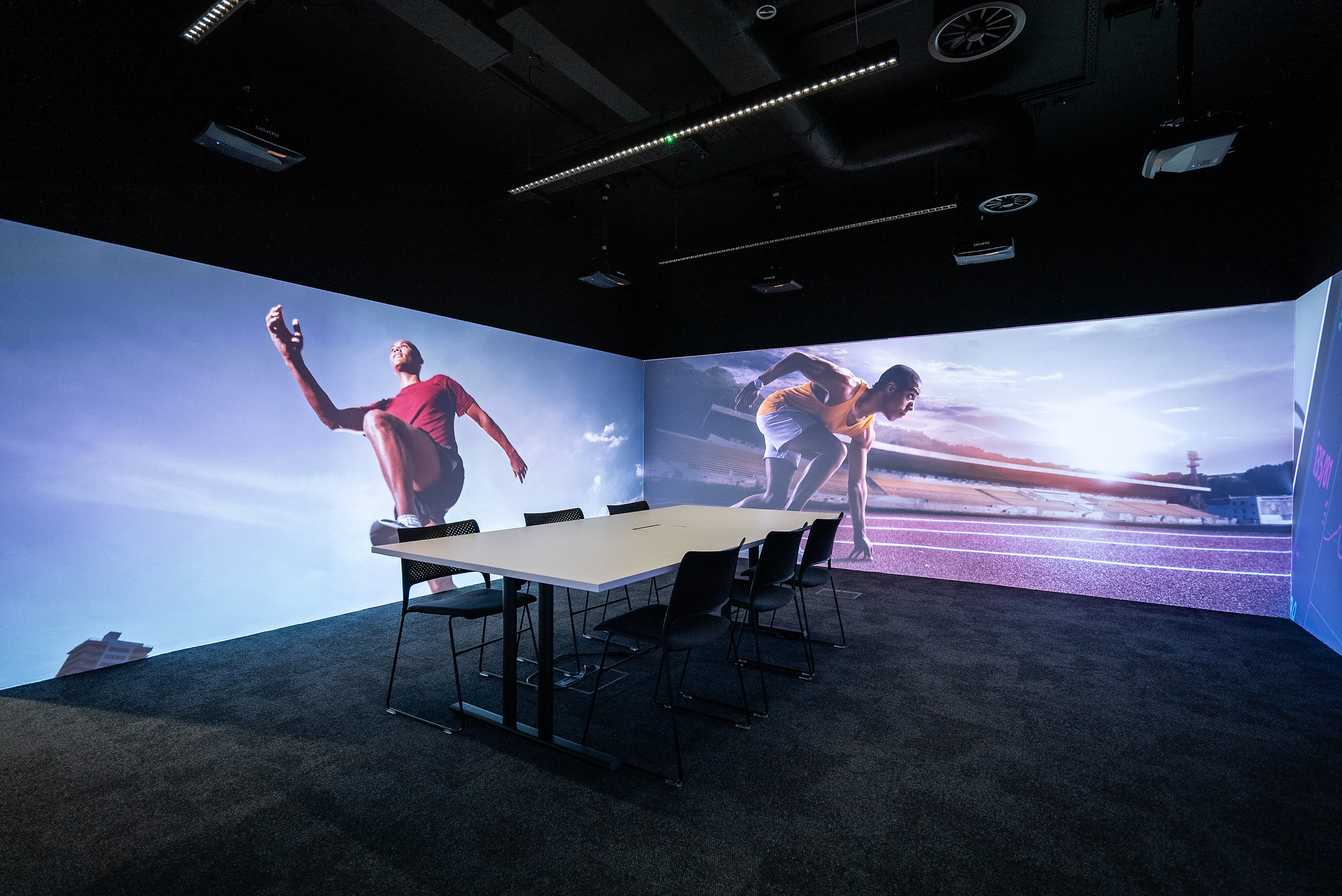
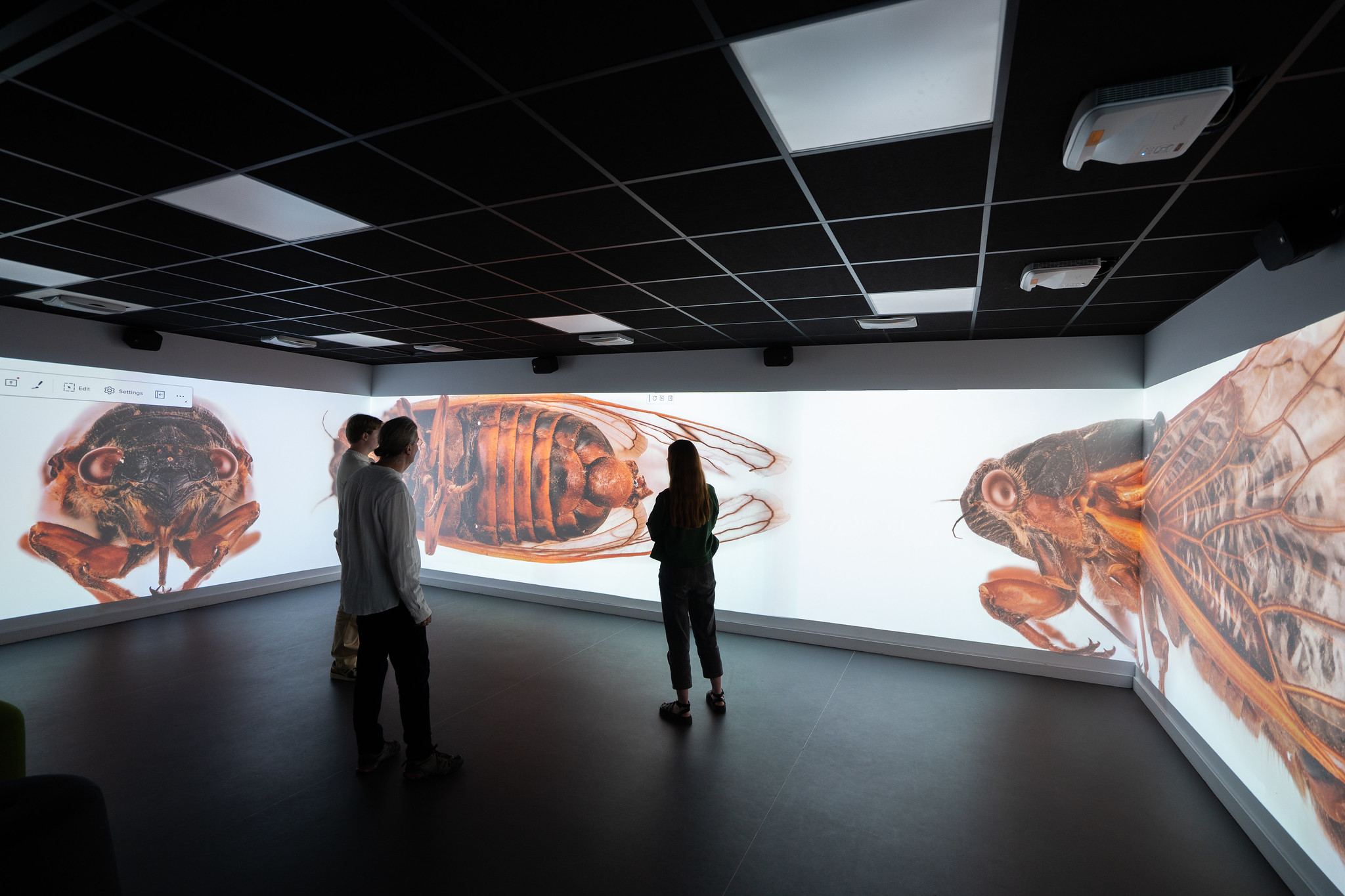
The system is used for diverse scenarios - from rural maternal care with limited resources to high-risk trauma crises. Students can engage directly with 360-degree simulations of clinical environments alongside peers and instructors, enhancing realism and group-based learning.
The impact of the Igloo on learning outcomes has been substantial. The immersive experience allows students to process anxiety-inducing clinical situations in a controlled environment, preparing them to recognise and manage complex clinical events in the real world. And, due to the lack of sophisticated medical equipment in more rural hospitals, the space gives familiarity to students who would otherwise have no exposure to it.
Because of the size of the space and the flexibility afforded by Igloo Core Engine, our software platform for immersive spaces, educators at UTA can manage a large footfall of students and cycle through hundreds of immersive scenarios, all stored on the cloud. In one particular case, UTA were able to get 200 students through a scenario in just a few days and with only one teacher and one instructor managing the session.
Additionally, the space afforded allows for the use of large props to add further validity to student learning. UTA often use hospital beds, mannequins, and other health paraphernalia to enhance the learning experience even further, creating a realistic portrayal of various nursing scenarios.
One of the added bonuses of choosing a shared immersive solution over a VR tool like a headset is greater accessibility and much reduced motion sickness. The flexibility of not requiring additional hardware has removed barriers to learning and offers a less intense immersive experience than closed-off solutions, with no nausea typically induced.
UTA use structured learning objectives for every Igloo session and follows up with detailed surveys to ensure these outcomes are met. Results from in-house surveys reveal high student satisfaction and confirmation of learning goals. Notably, students who experienced simulations of clinical sites in the Igloo reported significantly greater comfort and orientation when they visited the real locations the next day.
Digital collaboration is also a key feature, with the faculty maintaining an active network with other Igloo users, sharing ideas, content, and innovations. This community-driven approach has expanded UTA’s in-house capabilities.
The space has also caught the attention of a national audience. During InfoComm 2024, it was recognised with three HETMA awards, Best Collaboration Solution, Best Immersive Experience, and AV Project of the Year. It even earned a spot on state news channels such as the Arlington Report when it opened.