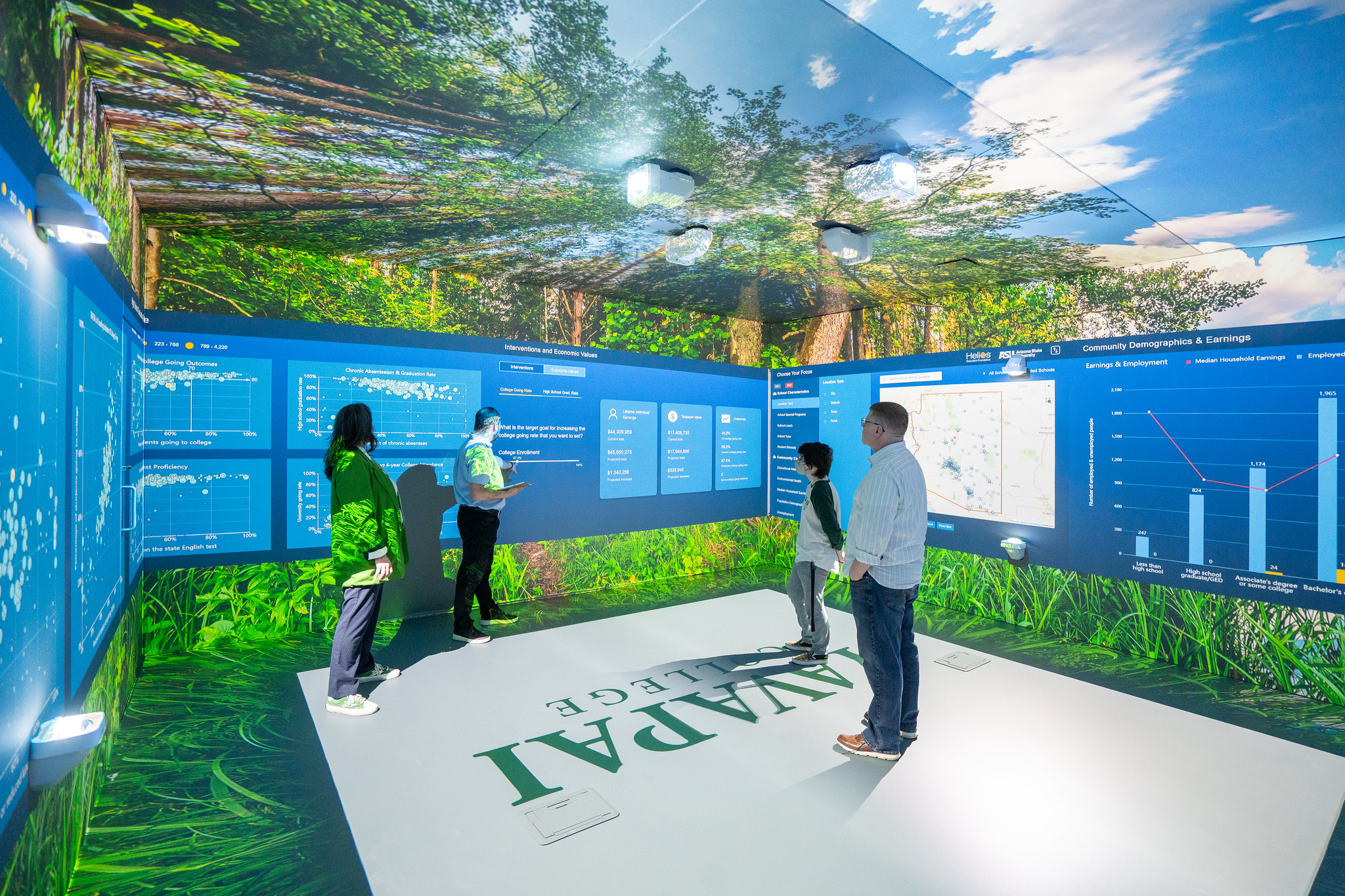
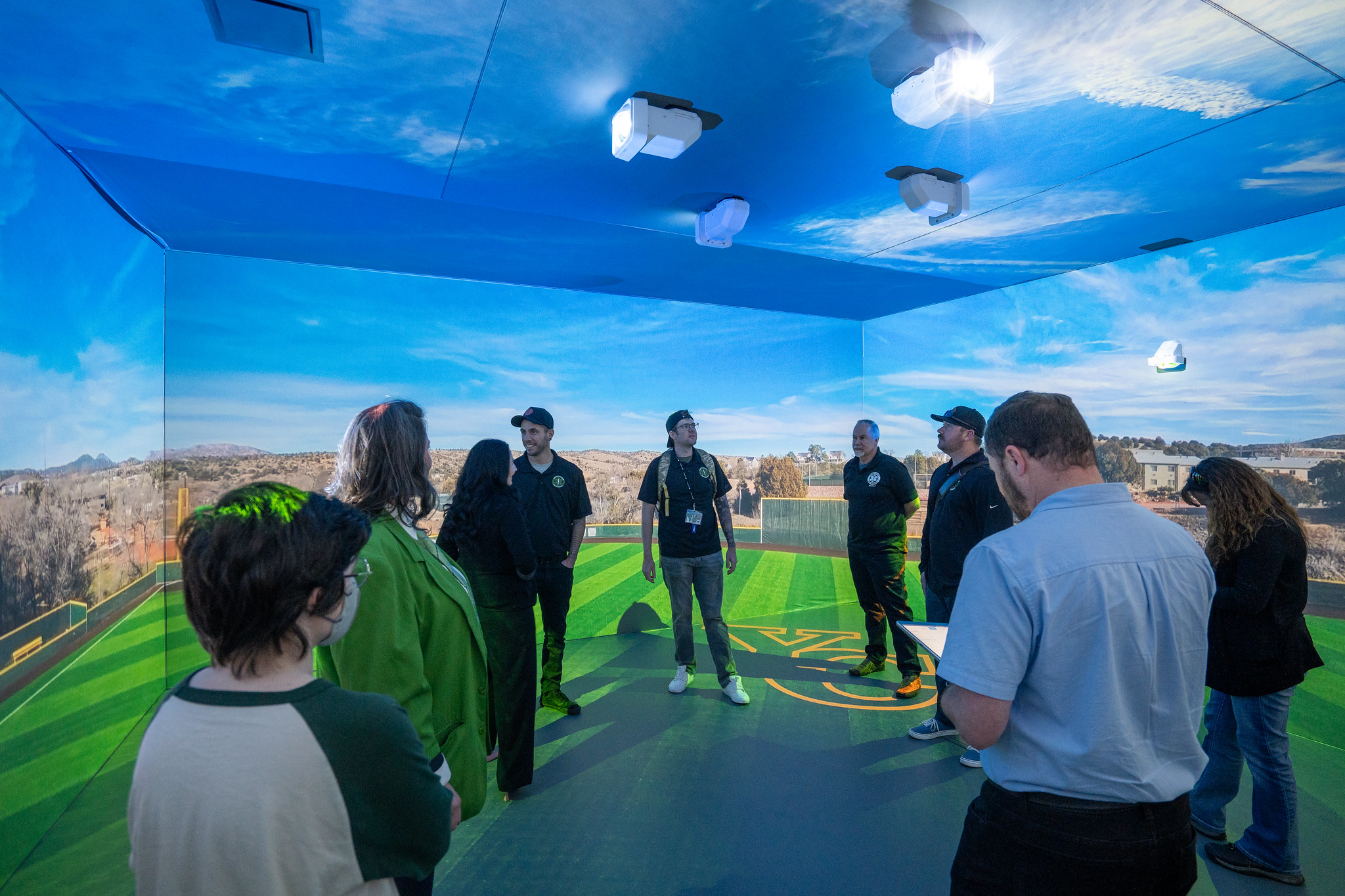
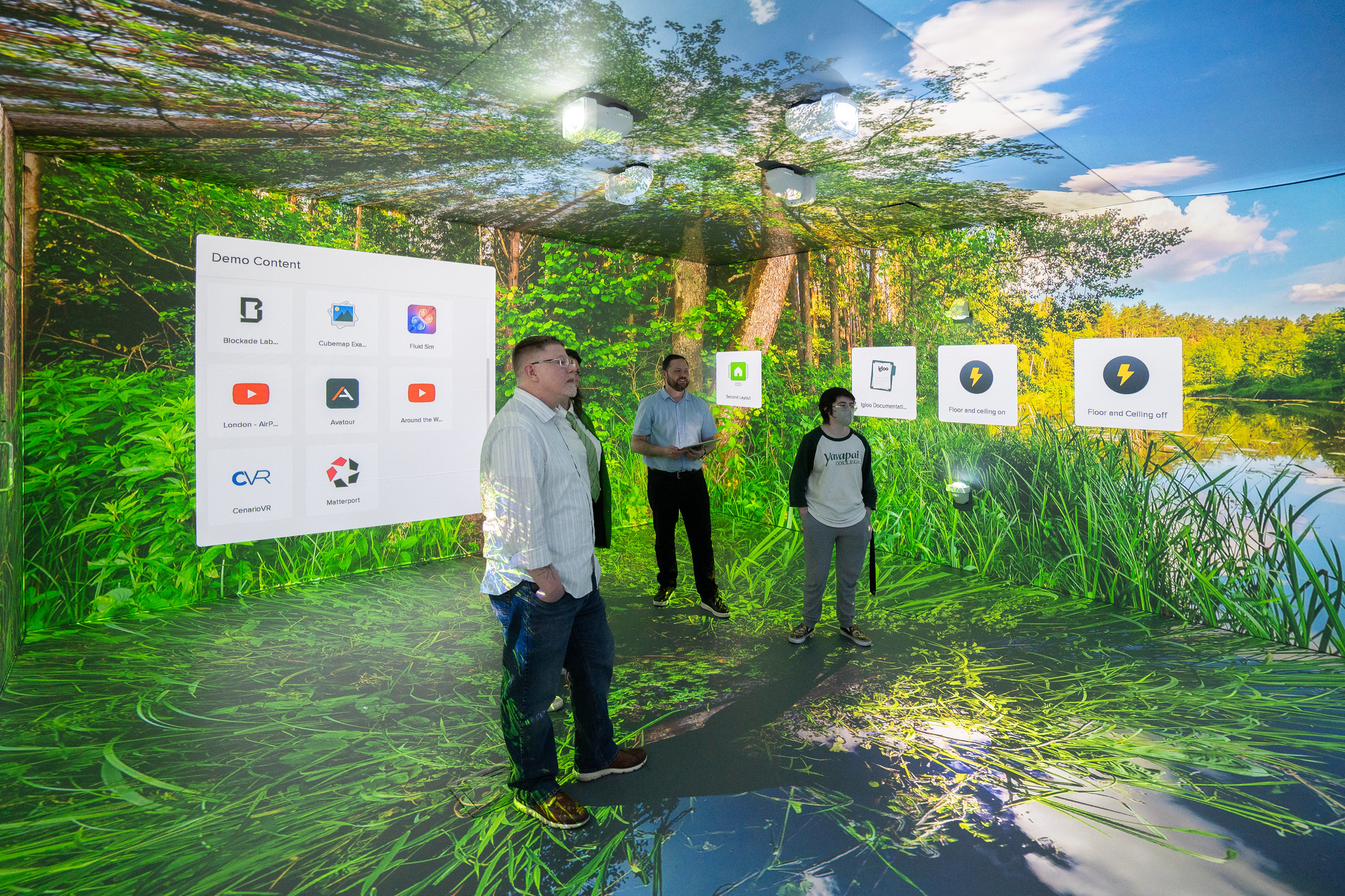
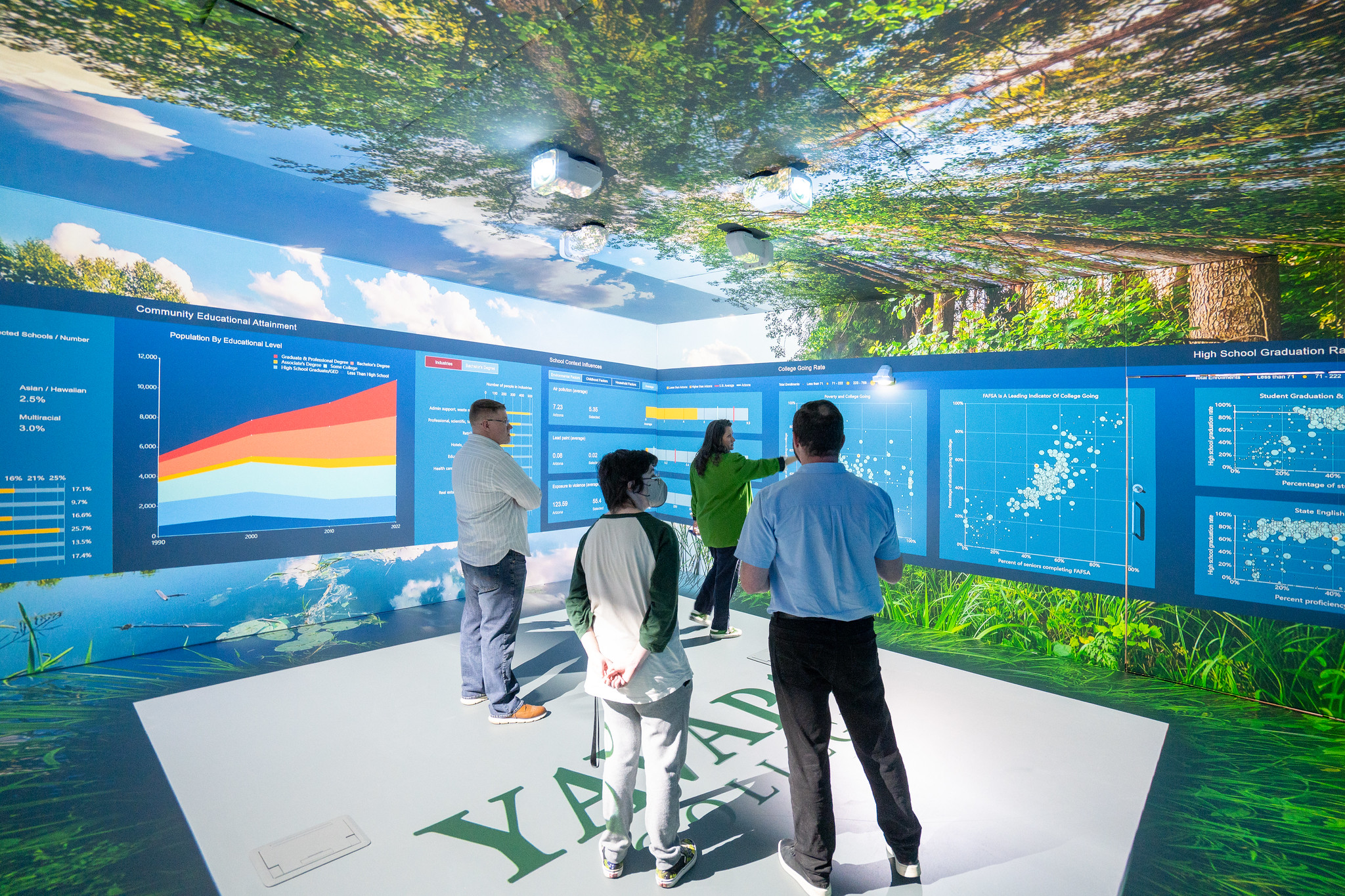
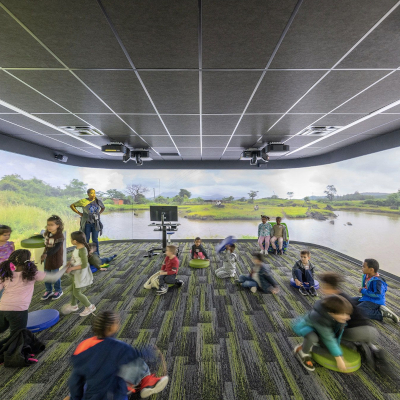
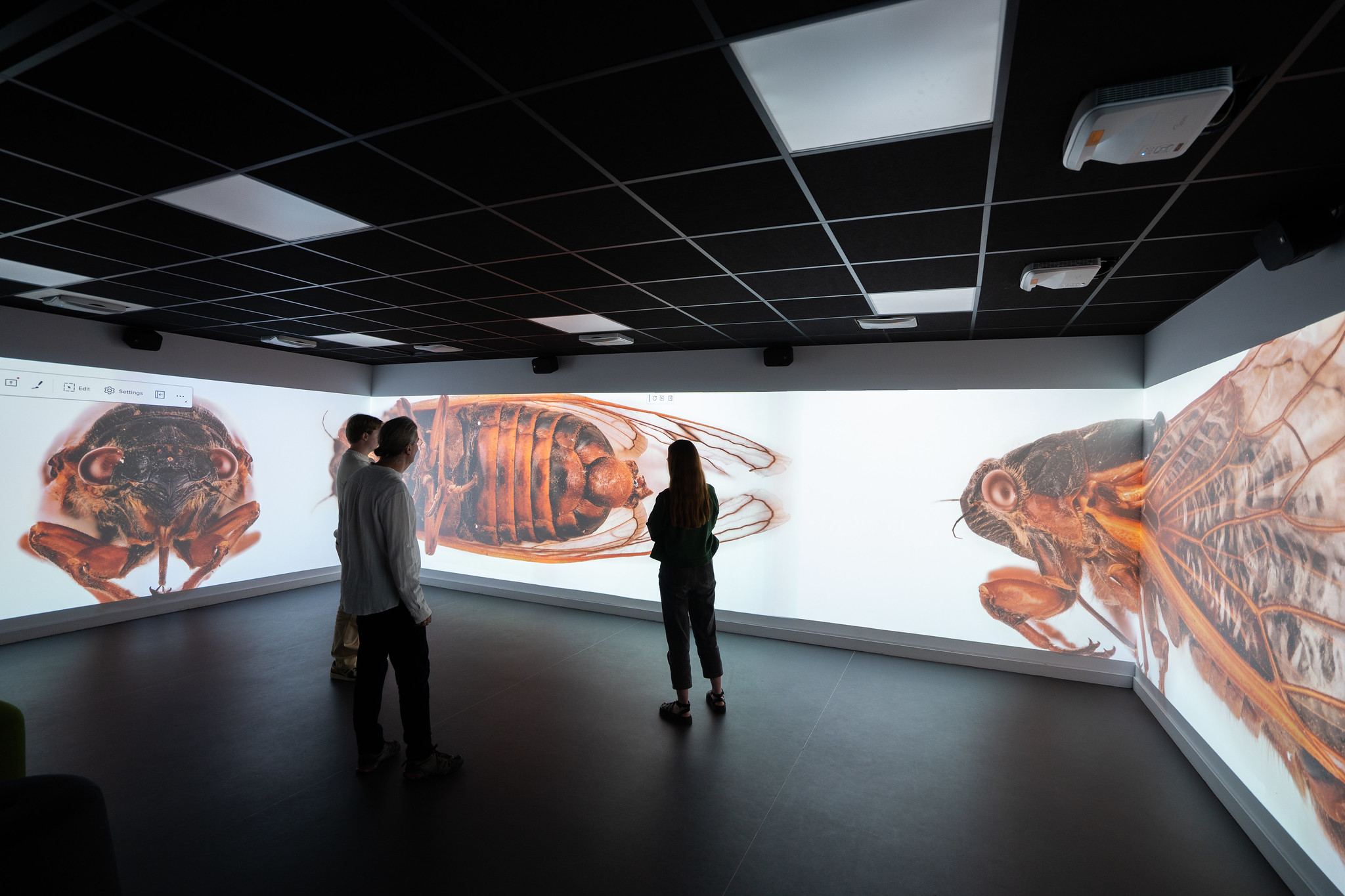
The YMAX has quickly become one of the most active and versatile learning spaces on campus, supporting a wide-range of academic, cultural, and community-facing use cases across Yavapai College.
In the short window since opening, the college identified multiple distinct use cases, ranging from data visualisation and digital art galleries to virtual field trips, architectural walkthroughs, simulation, immersive media production, and more.
Academically, the space is being used to support disciplines across the arts, humanities, sciences, and applied subjects. During the Spring 2026 Research Symposium, a first for the college, faculty from Art History, Philosophy, Psychology, and Agriculture used the immersive environment to share research in new, visually rich ways. Working from a simple Google Slides template, faculty were introduced to intuitive building tools that allowed their content to extend across four walls, floor, and ceiling, lowering barriers to adoption while dramatically increasing engagement.
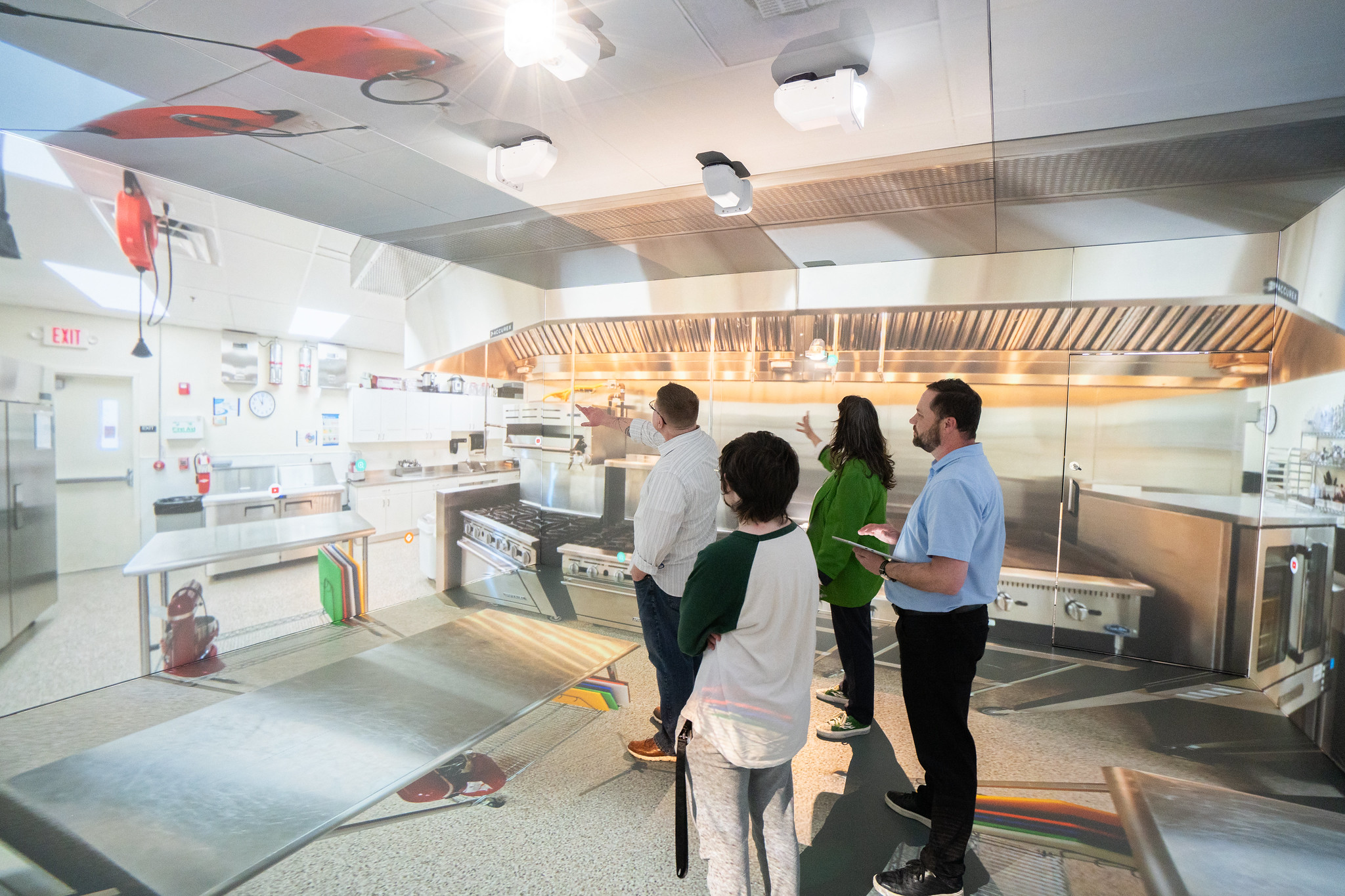
In culinary arts, an instructor filmed her commercial kitchen in 360° and built an interactive experience. Students can explore the kitchen before entering it physically, accessing safety guidance, equipment manuals, and embedded media at their own pace. This all helps to reinforce confidence, comprehension, and safety, before hands‑on instruction begins.
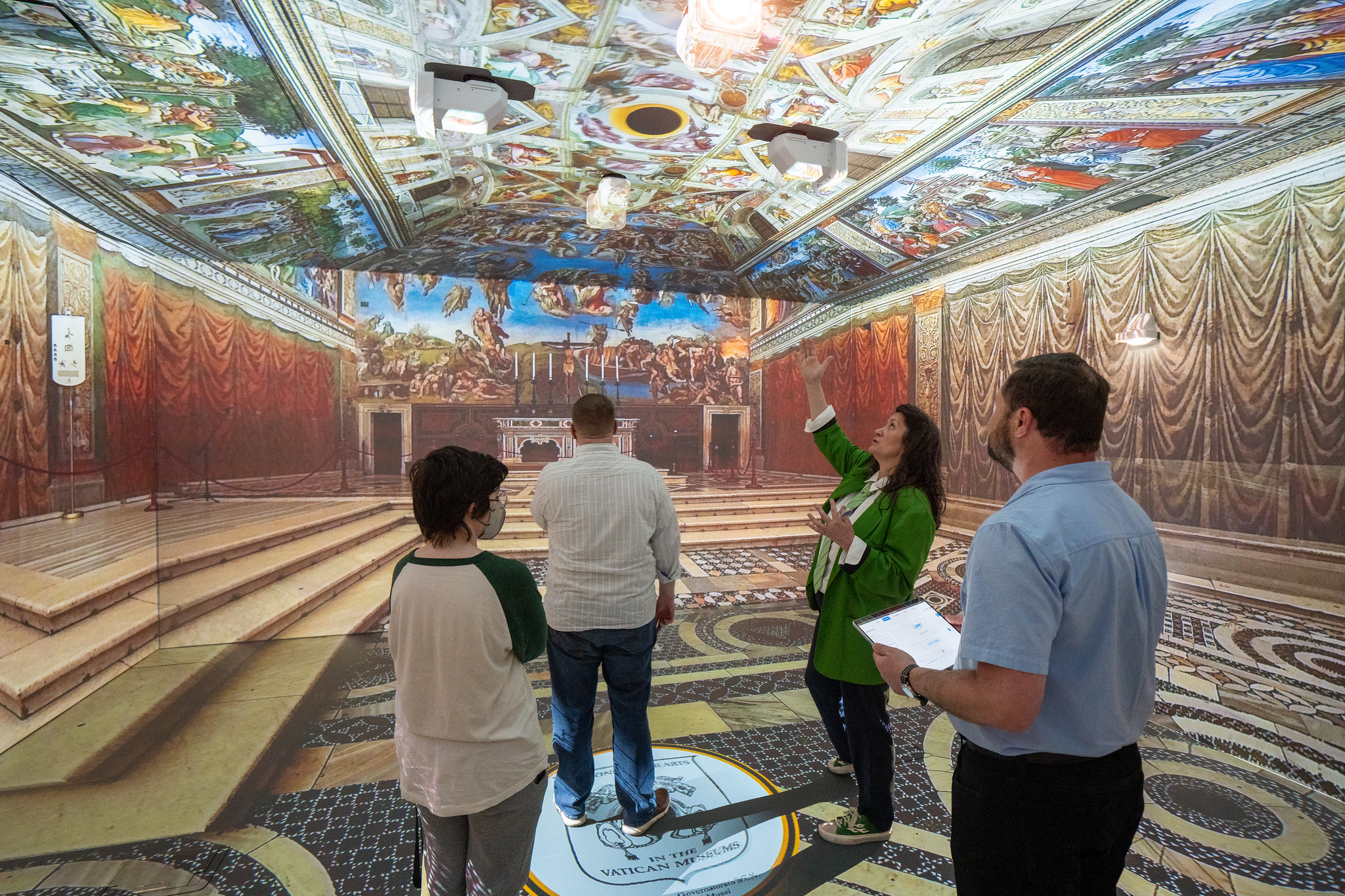
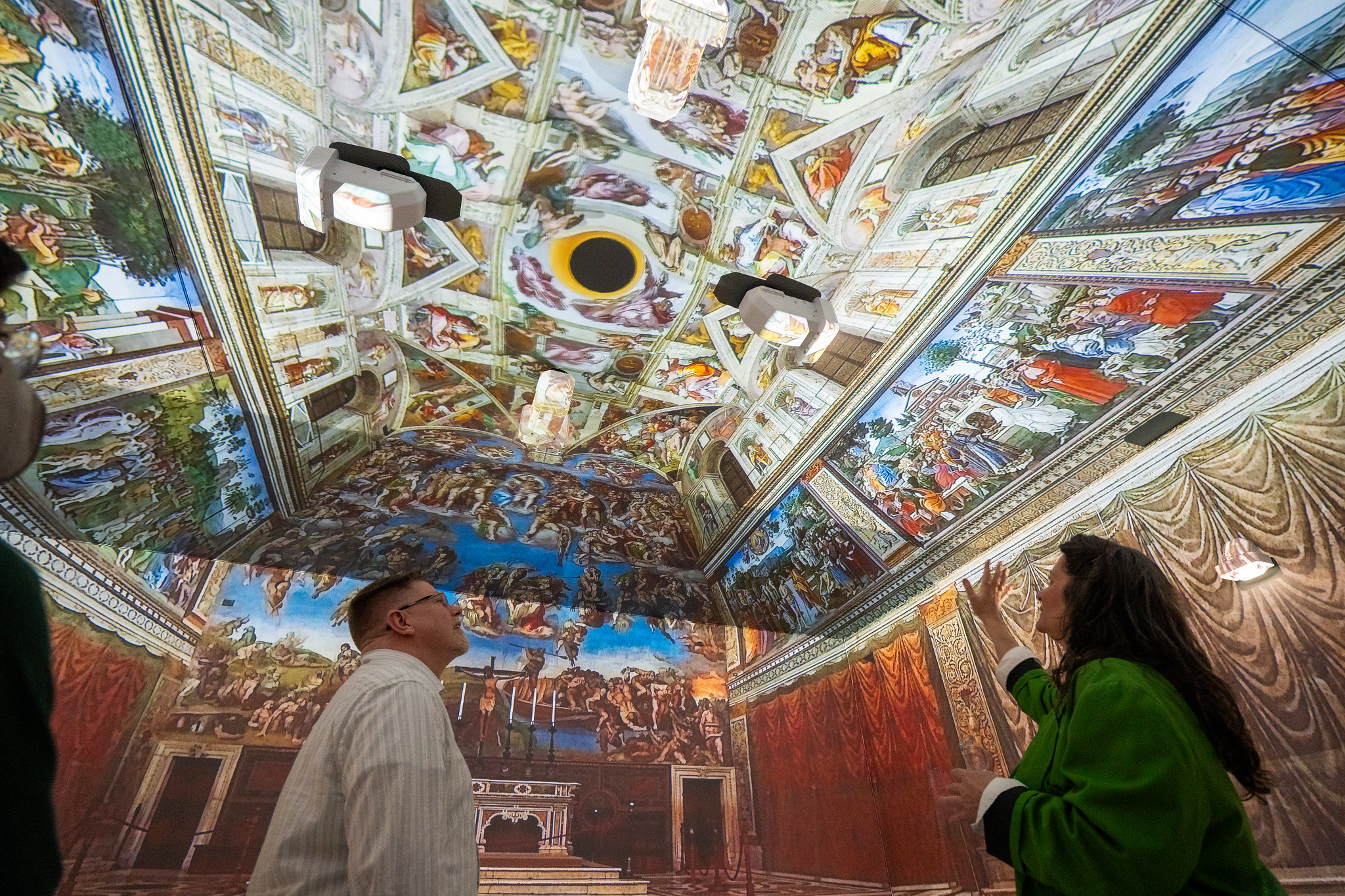
In art history, students are no longer limited to flat images on a screen. Lessons on Italian Baroque architecture place them beneath the Sistine Chapel ceiling, surrounded by the full spatial and visual context required to understand how art, architecture, and emotion intersect at scale.
In design, the immersive room has become central to a new accelerated Bachelor of Design. Students are not creating mock-ups of exhibits; they are creating the exhibits themselves, then stepping inside them.
Additionally, for the Literary Southwest event on campus, an immersive exhibition was created around 'Diaries of War', built using Adobe Premiere and narrated by authentic voices from within the college and local community to explain the experiences of living in a warzone on both sides. The experience was approved by the book’s author and illustrator and demonstrated how immersive technology can be used to bring literature, illustration, and lived experience together in a powerful, emotionally resonant format.
The space’s ability to foster human‑centred learning has been especially evident in sessions with honours students and visiting international scholars. In one such session, Google Street View was used to explore scholars’ hometowns around the world, turning a technology demonstration into a shared cultural exchange. Students took turns guiding others through familiar places, sharing personal histories and local context, revealing how immersive tools can create connection, dialogue, and empathy alongside exploration.
Beyond teaching and learning, the space has also supported wellbeing and community engagement. At a recent Benefits Fair, the space was transformed into a calm, meditative environment using 360‑degree video, the Calm app, and curated YouTube content, resulting in over 120 individual engagements. The ability to rapidly reconfigure the same space, from high‑energy interaction to quiet reflection, has expanded its value well beyond traditional classroom use.
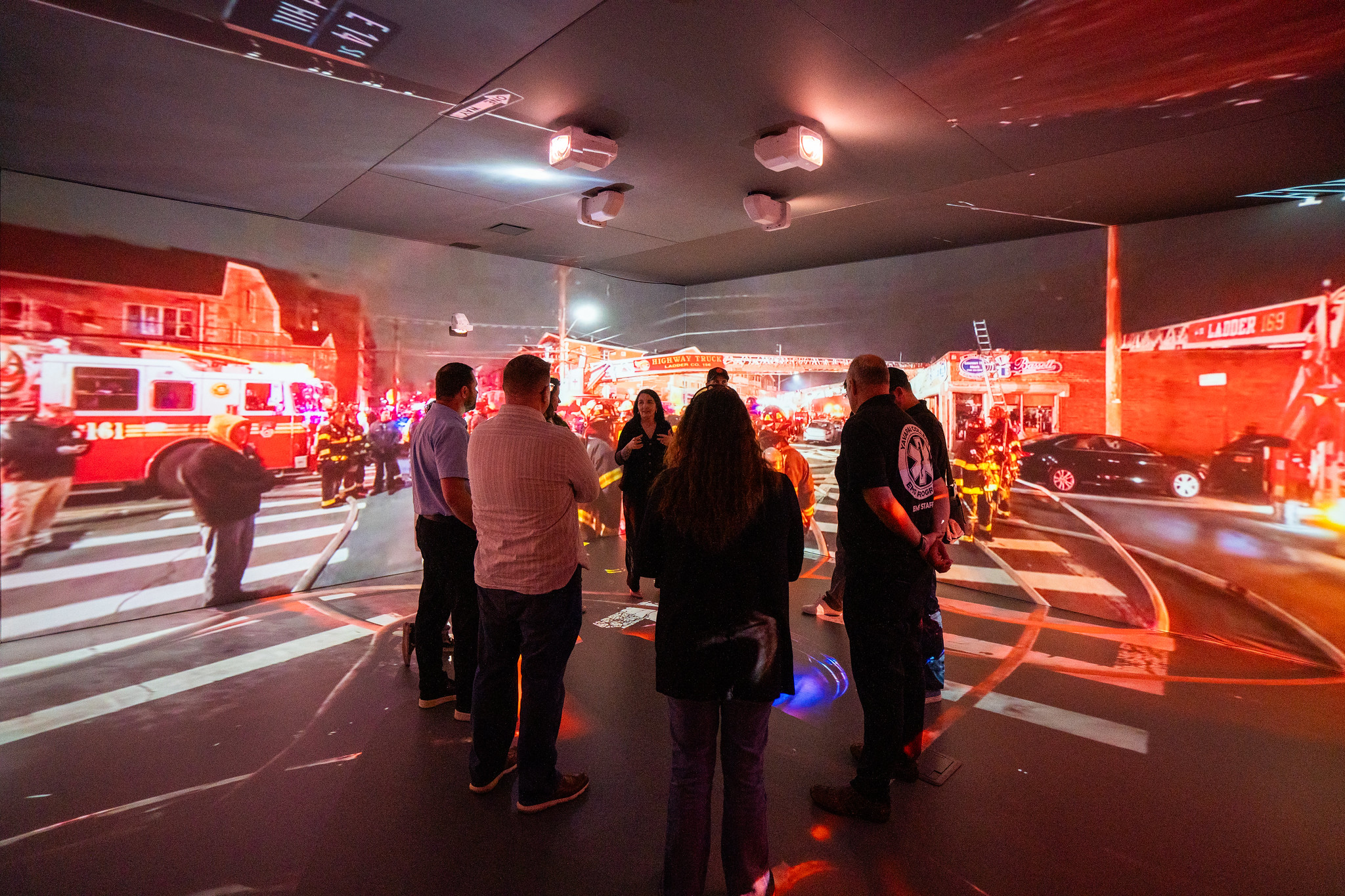
Simulation and training have emerged as another key area of impact. At the request of EMS and Paramedic faculty, a high‑intensity immersive simulation was developed to help students rehearse clinical focus under extreme pressure. Designed as a 40‑minute experience layered with dynamic visuals, complex soundscapes, and sensory distraction, the simulation aimed not for spectacle, but realism. Both students and faculty described it as a transformative learning experience, with discussions already underway to integrate it into the formal curriculum.
As Executive Director of Technology Engagement and Strategy, Ryan Gray put it: “Instead of buying one room, we bought like 16 rooms and brought an entire portfolio of experiential learning to Yavapai College, because it's a space that can be almost anything we want it to be.”
The space has also become a focal point for tours, demonstrations, and outreach. To date, Yavapai College has hosted more than two dozen bookings spanning campus departments, K‑12 educators, community groups, recruitment events, and visiting faculty and students. Consistently cited as one of the most popular stops on campus tours, the YMAX now plays an important role in showcasing the college’s commitment to innovative, future‑focused education.
For the staff at Yavapai, the impact has been just as significant. Faculty with minimal technical experience can load content and teach confidently. Those who want to push further have the tools and support to do so. In both cases, adoption has been fast, and momentum is building.