

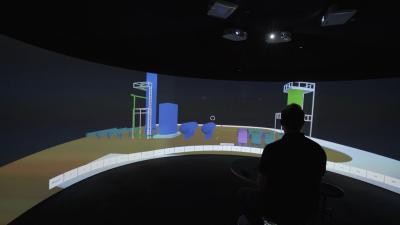
Visualise the future of your projects in Shared VR with our new Synchro integration
30th April 2020
One of the big benefits of Igloo Shared VR is that it’s incredibly easy to use the tools you already use. Our technology is built to be content…
If you’re setting out on your search for your immersive technology solution, you might have come across a very common misunderstanding that’s out there in the market.
It’s very often the case that the terms ‘CAVE’ and ‘Igloo’ are used interchangeably.
But, the truth is, they are two very different technologies, with very different attributes, and hugely different costs.
And, as our product range and software suite continue to grow, we wanted to provide an updated comparison of what you should consider when weighing an Igloo vs a CAVE.
What's an Igloo?
The Igloo, originally, was a product of the 1990s dance music community. And it was put together by technically-minded pragmatists who wanted to deliver the best possible experience at the lowest possible price-point.
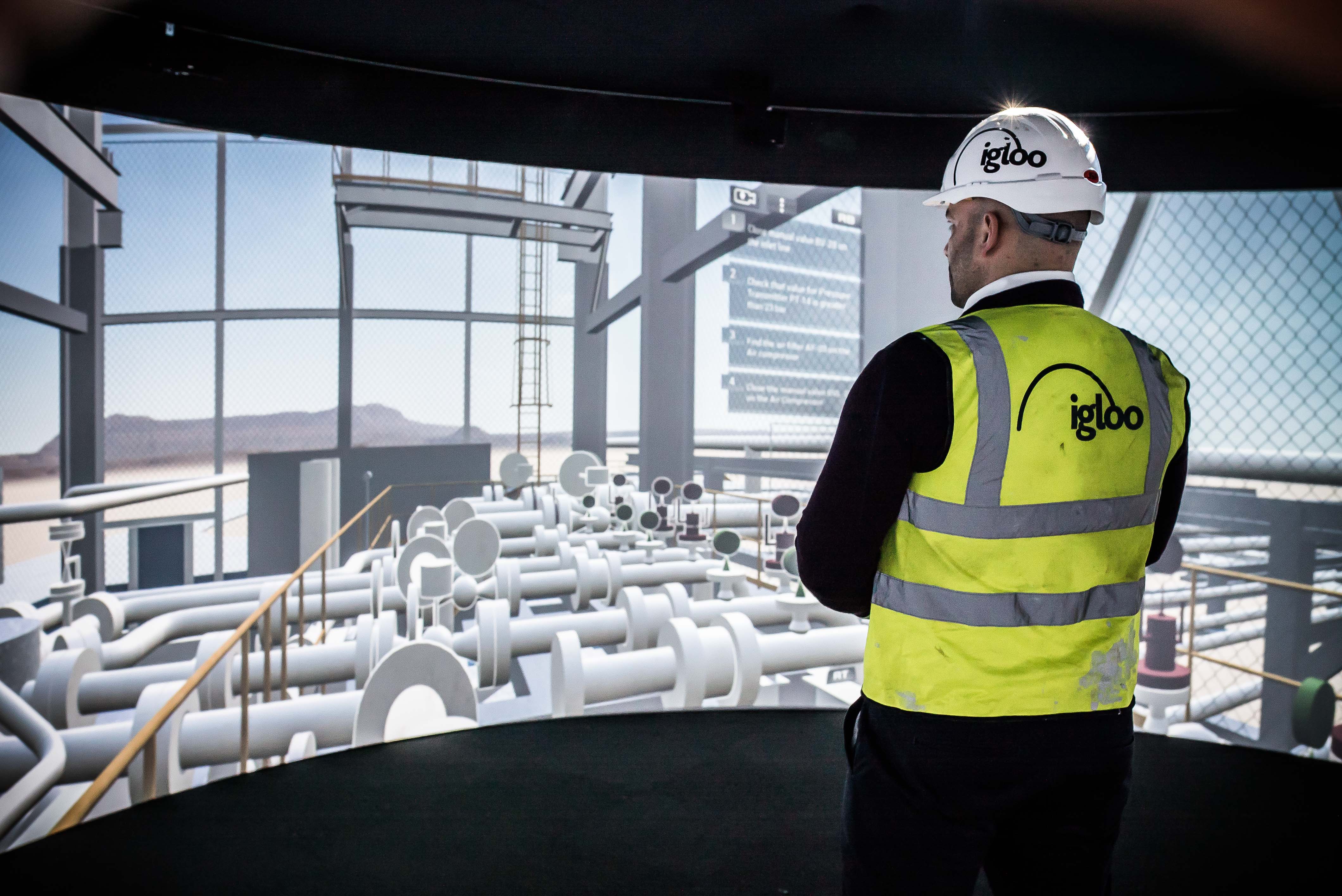
The term Igloo is a brand name, which refers to the original dome-shaped systems. An Igloo can now come in a range of standardised shapes and sizes, including cubes and cylinders as well as domes. It is also possible to use an Igloo Immersive Media Player to retrofit any space with Igloo immersive technology, regardless of size, shape, or dimensions.
Igloo also integrates with any type of display technology, including 2D and 3D projection, LED,
or other flat panel displays. It is a layer-based visualisation system that can work with any content, from any source, in any format, for any use case.

What's a CAVE?
The CAVE, originally, was a product of the 1990s academic community. And it was put together by idealistically-minded academics who wanted to deliver the most realistic possible experience using the best possible components.
The word CAVE itself is an acronym for Cave Automatic Virtual Environment. It’s also a clever
reference to the allegory of Plato’s Cave (which explores the nature of perception, reality, and
illusion). It is typically a cube-shaped space using extremely high-resolution projectors. The walls, floor, and ceiling act as projection screens to create an immersive environment. And a user generally wears stereoscopic glasses to see, walk around, and interact with 3D content using a variety of input devices.
You could debate the details for hours. But, in essence, it comes down to three key points:
We thought it may be useful to emphasise the distinctions. So, we’ve put together an updated edition of our ‘Igloo vs CAVE’ white paper - and we’d encourage you to download it for the full story.
We've created unique installations for all sorts of clients who were initially looking for a CAVE - and we'd love to tell you about them.
If you’re ready to find out more, just get in touch. We can even give you a virtual demo of the Igloo technology.
What are you looking for today?
 From watching to doing – how Sunderland College makes immersive learning interactive
 Design the experience, not just the content – lessons from UWTSD
 LASTING System and Igloo Vision sign an exclusive distribution agreement for Southeast Europe
 How Igloo helped deliver narrative gaming experiences at Sheffield DocFest
 How to Successfully Launch an Immersive Classroom in Higher Education
 Are immersive rooms easy to use?
Categories: White papers, Shared VR, News
30th April 2020
One of the big benefits of Igloo Shared VR is that it’s incredibly easy to use the tools you already use. Our technology is built to be content…
6th November 2020
At Igloo, all our software is developed inhouse by our incredible software team - they’re constantly working on new features for clients of…
3rd May 2022
Something we’ve been asked a lot lately by clients in the tourism sector is how they can use our immersive technology to enhance the experience…