

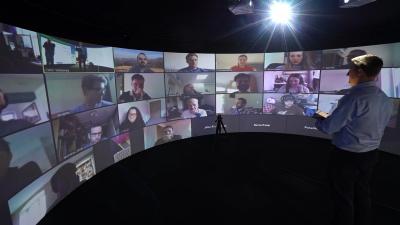
Filling an empty room with friendly faces
31st March 2020
We’ve had video conferencing on the brain lately. And, for obvious reasons, so too has the rest of the world.One platform in particular, Zoom…
So, we’ve noticed a new study making waves across LinkedIn this past week. It’s been commissioned by PwC to investigate the value of training in virtual reality.
Importantly, PwC’s findings aren’t just assumptions. It crunched the numbers, and what it found was that VR-trained employees:
Impressive, but maybe not surprising. One of the main uses we see of our immersive technology is simulations for training and teaching. To take one of our clients as an example, Lanes Group uses its Igloo cylinder for training engineers in a high-risk environment. Not only did it raise the standard for training, it could:
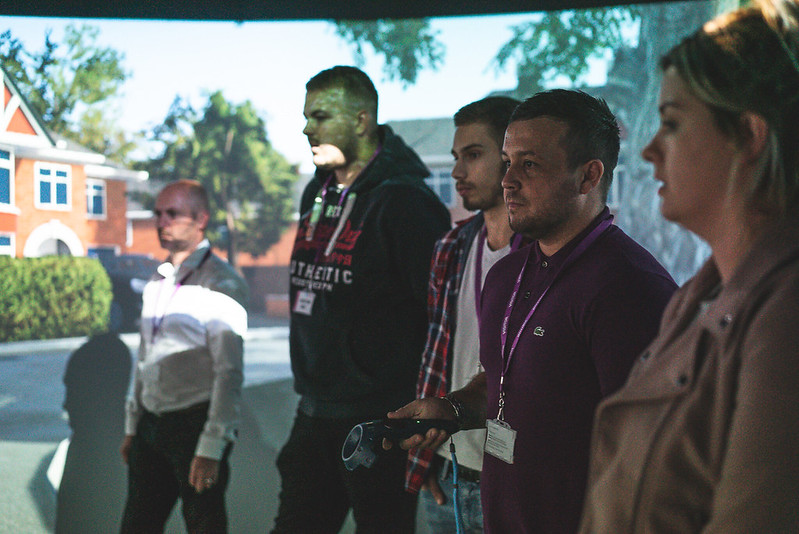
It goes to show that, when people are fully immersed, there’s no room for distractions. They get more out of the training than they would’ve otherwise. Good immersive content also resonates more strongly than reading off a screen. And that all leads to better outcomes and better teaching.
Of course, the PwC study treats VR as an individual, immersive experience, using VR headsets. As such, it recognises VR headsets can’t replace the classroom any time soon. It suggests that a team of employees could take training and have follow-up discussions. And that’s because learning, whether in enterprises or education, is generally a shared process.
And this is exactly where Shared VR can be used to complement the use of VR headsets. In a shared immersive space, groups of colleagues can connect with a VR experience together - and each other. They can collaborate and discuss during their training. They can see what other people are looking at, they can read body language. The tutor can lead the training, rather than leaving everything to the VR program. Yet they’re still cut off from the distractions of the outside world.

It still might not replace classrooms, but it’s another step along the way to replicating that vital environment while maintaining the benefits of immersive technology.
It really is powerful stuff, so we would strongly encourage you to read the PwC study. And, while you’re at it, you should also read how Lanes Group uses Shared VR to train its people.
What are you looking for today?
 From watching to doing – how Sunderland College makes immersive learning interactive
 Design the experience, not just the content – lessons from UWTSD
 LASTING System and Igloo Vision sign an exclusive distribution agreement for Southeast Europe
 How Igloo helped deliver narrative gaming experiences at Sheffield DocFest
 How to Successfully Launch an Immersive Classroom in Higher Education
 Are immersive rooms easy to use?
Categories: Education, Shared VR, News
31st March 2020
We’ve had video conferencing on the brain lately. And, for obvious reasons, so too has the rest of the world.One platform in particular, Zoom…
30th June 2021
If you caught our last blog post, you’ll have seen we were gearing up for ISE London 2021: a much (much, much) smaller affair than the edition…
8th October 2020
Right before the world went into lockdown, we were gearing up to announce not one, but two new office moves - which will make it far easier for far…