

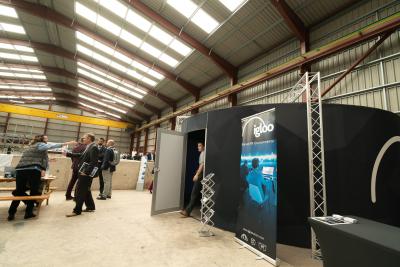
Visualising the possibilities for the nuclear industry
7th October 2019
At Igloo, we love to work with and support other innovative, forward-thinking companies. And that’s why we were so pleased to get involved …
In a recent Igloo webinar, the immersive learning team at the University of Wales Trinity Saint David explained how they use everything from simple pictures, presentations and video to tools like Matterport and Unreal Engine. Their starting point, however, is always the same: what does the session need to achieve?
.jpg)
What does good immersive content look like?
It’s a frequently asked question among anyone who’s considering a shared immersive space. But spend some time with the team at the University of Wales Trinity Saint David (UWTSD) and you soon realise it may not be quite the right question.
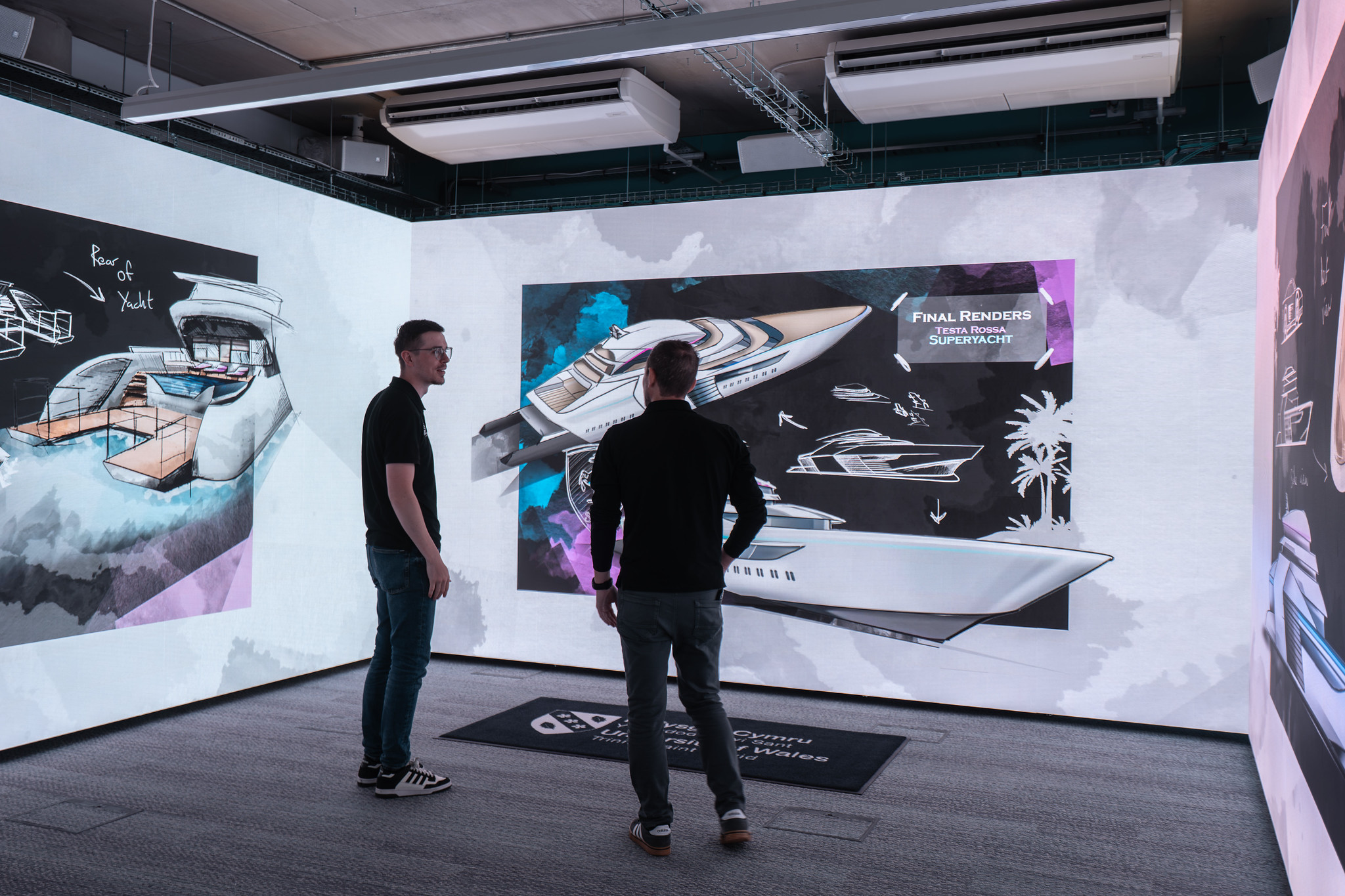
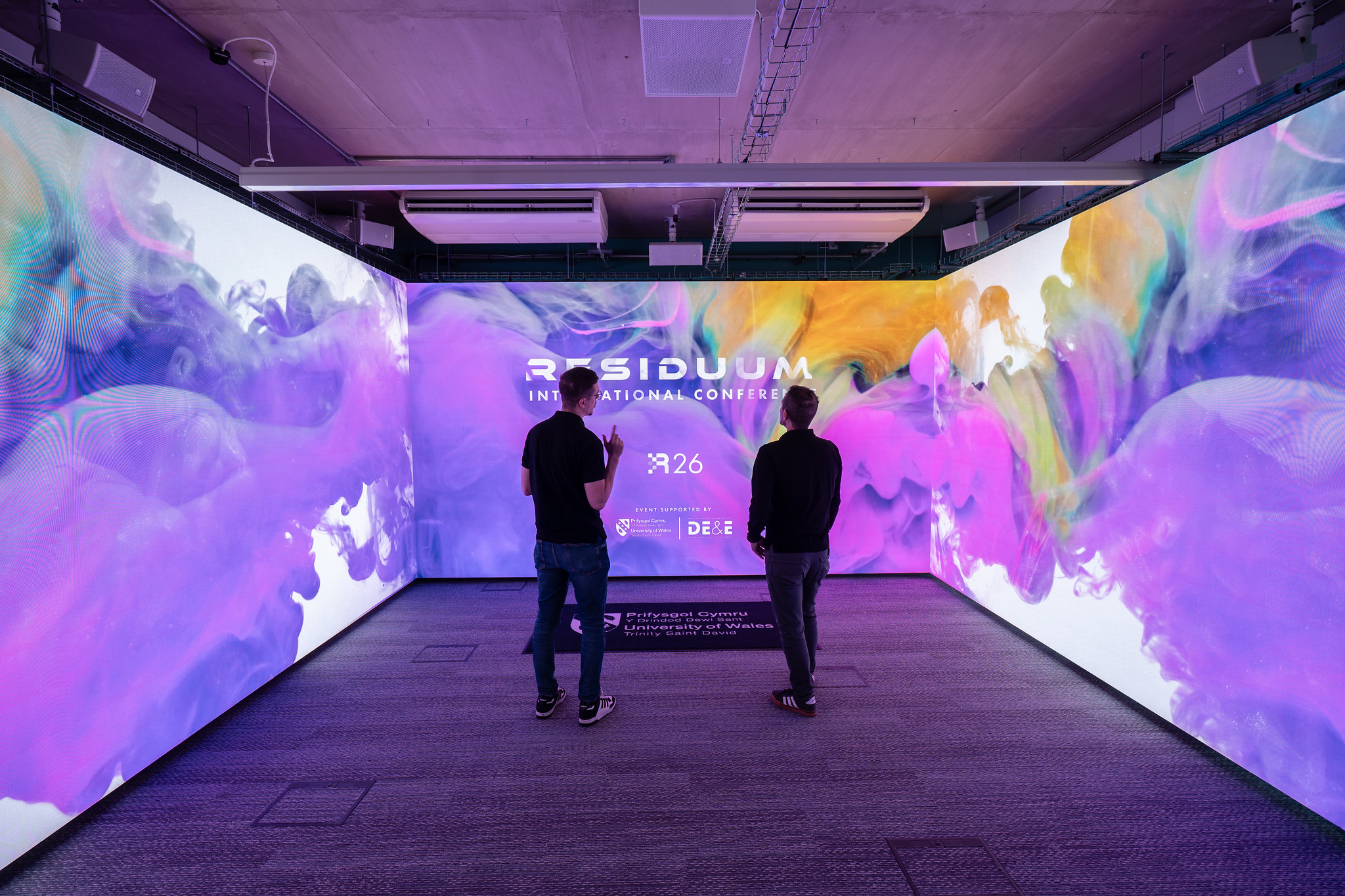
We recently joined the team in Swansea for a webinar exploring how they develop content and experiences for their Igloo spaces. The university has two Igloo-powered three-wall LED immersive spaces, in Swansea and Carmarthen, and uses them across a range of subjects ranging from engineering and construction to teacher education and early years.
Over the course of the webinar, the team demonstrated a formidable range of tools and techniques. There was 360° photography and video, Matterport, web content, PowerPoint, Photoshop, Twinmotion and Unreal Engine. Yet the technology was rarely the starting point.
Start with what students need to get from the session
UWTSD begins with the learning outcome. What do students need to understand? What do they need to observe, practise or experience? How will the session be run? And what role does the immersive space need to play?
As the team put it, “the student outcomes, the learning objectives are the core things that we have to drive all content towards.” That has an important consequence for content creation. The best solution isn’t necessarily the most technically sophisticated one.
Sometimes, simple is exactly right
One of the best examples comes from teacher education.
Working with partner schools, UWTSD simply filmed 360° videos inside real classrooms, capturing trainee and professional teachers at work. The university now uses those videos for observational training with around 200-300 students each year, before they go out on placement.
There is nothing especially elaborate about the production. “Not too complex, not too hard,” was how the team described it. “It’s not about the fanciest tool. It’s about the right tool.”
The same pragmatism appears elsewhere. In one early-years storytelling project, a student created the visual material in PowerPoint, exported the slides as images and arranged them across the immersive canvas. Other students have used familiar tools such as Photoshop. Creating for an immersive space doesn’t automatically mean learning a new category of specialist software.
Before you create it, see if it already exists
Often, UWTSD doesn’t create anything at all.
For school sessions, the team regularly looks first at material that is already available online. During the webinar, for example, they demonstrated content from NASA’s website running directly across the immersive canvas. As they explained: “The content’s out there.”
The same principle can apply to YouTube 360°, Google Street View, existing images, presentations and other web resources. If useful material already exists, the job may simply be to work out how it can best be used in the room. That opens up a much bigger content universe than any single library could provide. And it means educators don’t necessarily have to start a new production project every time they want to try something different.
Think about the whole experience
This is where UWTSD’s approach becomes particularly interesting. A session doesn’t have to revolve around a single piece of “immersive content”. Instead, different ingredients can be brought together to create the experience the educator wants.
One example shown during the webinar was a wine-tasting session. Vineyard footage from YouTube helped establish the setting. PowerPoint provided information. The wine itself added smell and taste.
Individually, none of those ingredients is especially unusual. Together, they created a truly immersive experience.
A 360° environment might establish context while conventional information provides the focal point. Video might sit alongside a presentation. Digital content can work with physical objects, discussion, sound or other sensory elements.
Or, as the UWTSD team put it: “We’re not trying to create flashy images. We’re just trying to create an experience.”
Use sophisticated tools when its warranted
None of this means UWTSD avoids more advanced content creation.
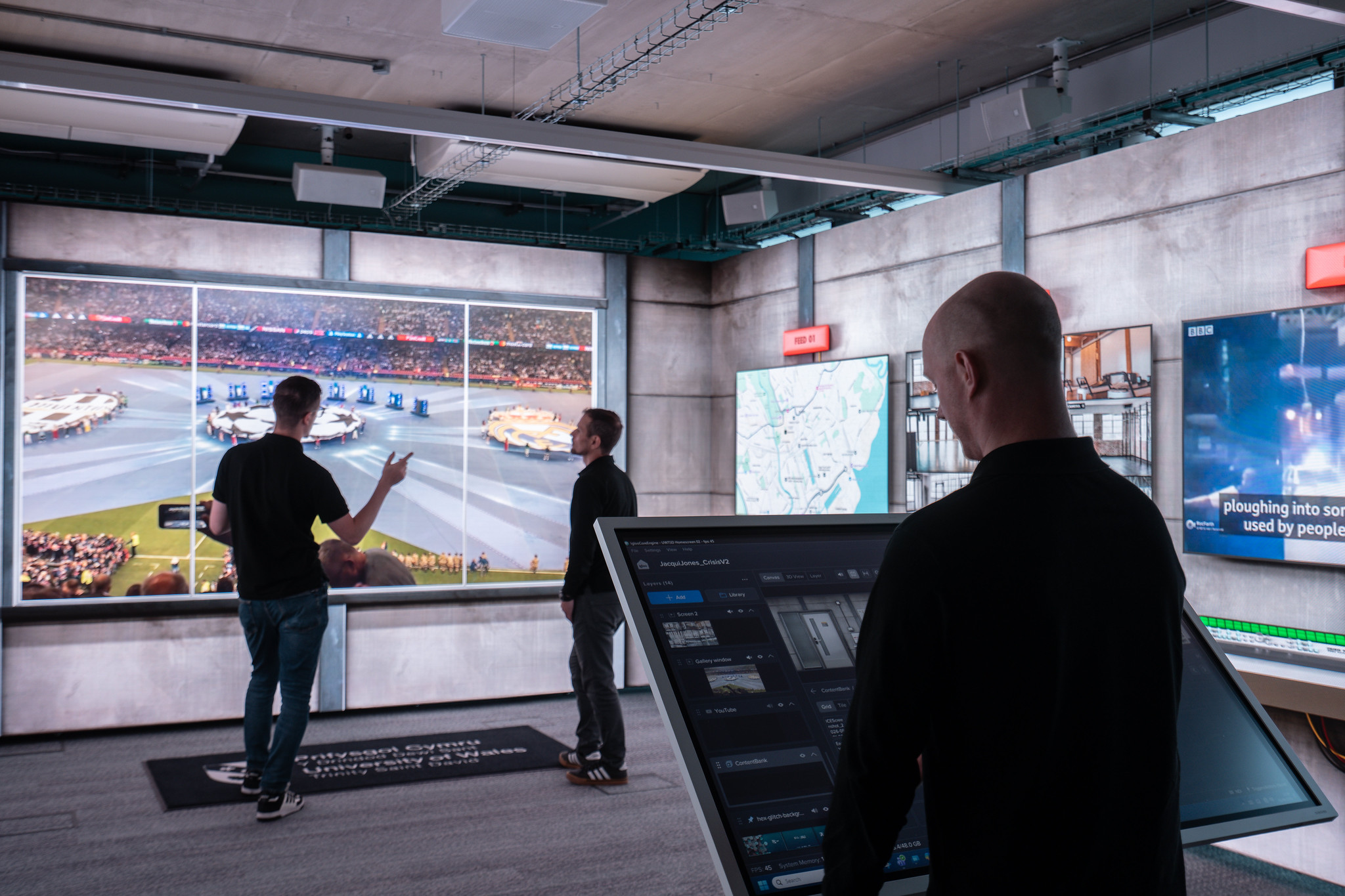
The team uses Matterport to capture university spaces and locations elsewhere, adding video, images, text, websites and learning material to the resulting environments. It works with tools including Twinmotion and Unreal Engine. And it has the in-house skills to develop considerably more complex experiences when the teaching idea calls for them.
One striking example is an escape-room experience built in Unreal Engine for public-services students. Students enter a digitally recreated bedroom and work together to solve a missing-person challenge. The Unreal environment is combined with an interactive touchscreen and physical props around the room, including toys, desks and Lego.
Again, the technology is serving the session rather than defining it.
When deciding how to tackle a new request, the team asks whether it really needs Unreal, whether an image would do the job, or whether the required interaction could be created directly within Igloo Core Engine.
The range of options is an advantage because it gives them choices. It isn’t a hierarchy in which the most sophisticated option automatically wins.
There is more than one way to create a great immersive experience
Perhaps that is the bigger lesson from UWTSD. An immersive space can accommodate highly specialised content. But it can also make new use of material that educators already have, resources available freely on the web and straightforward content created with familiar tools.
The skill lies in choosing and combining those ingredients around what people actually need to learn or do. And UWTSD is happy to share what it has learned. Over the past three years, the team has welcomed companies, colleges and schools into its spaces to see sessions in action and discuss how different teaching problems can be approached. As they said during the webinar: “We’re very open to visitors.”
That same spirit of sharing was one of the reasons for holding the webinar in the first place.
Read more about UWTSD in the case study here.
Or get in touch below to discuss how you could do the same.
 From watching to doing – how Sunderland College makes immersive learning interactive
 LASTING System and Igloo Vision sign an exclusive distribution agreement for Southeast Europe
 How Igloo helped deliver narrative gaming experiences at Sheffield DocFest
 How to Successfully Launch an Immersive Classroom in Higher Education
 Are immersive rooms easy to use?
 The Science of Shared Immersion: Why Shared Experiences are More Impactful
Categories: News
7th October 2019
At Igloo, we love to work with and support other innovative, forward-thinking companies. And that’s why we were so pleased to get involved …
16th September 2020
At Igloo, we’ve been creating standout immersive installations and events for over a decade. That means we know what you need to consider when…
30th April 2024
Did you hear the news? We're going to be attending Digital Health Festival in Melbourne from the 7th-8th May.And what's even more exciting is we …