

Igloo Core Engine Unveiled at ISE 2023
17th February 2023
The big news for Igloo Vision this month has been the release of our new software platform, Igloo Core Engine. You may already have seen on LinkedIn…
When Yavapai College first discovered immersive environments, it wasn’t part of a long-term procurement plan or a multi-year pilot programme. It started with a simple moment of curiosity at InfoComm and quickly turned into something far bigger.
Within months, the college had moved from inspiration to implementation. Today, their immersive space is being used across disciplines, from culinary arts to emergency medical training, supporting students, faculty, and the wider community.
So what made it work?
We explored their journey to success in our latest webinar ‘Yavapai College's Journey into Immersive Learning, from Install to Adoption’, where we sat down with Ryan Gray, Executive Director of Technology Engagement, and Robyn Bryce, Executive Director of Learning and Education Innovation at Yavapai College, to see how they implemented immersive learning, the pitfalls encountered along the way, and the outcomes and benefits that they are seeing today.
In case you missed that webinar, here are some of the key lessons higher education leaders can learn from Yavapai College’s journey.
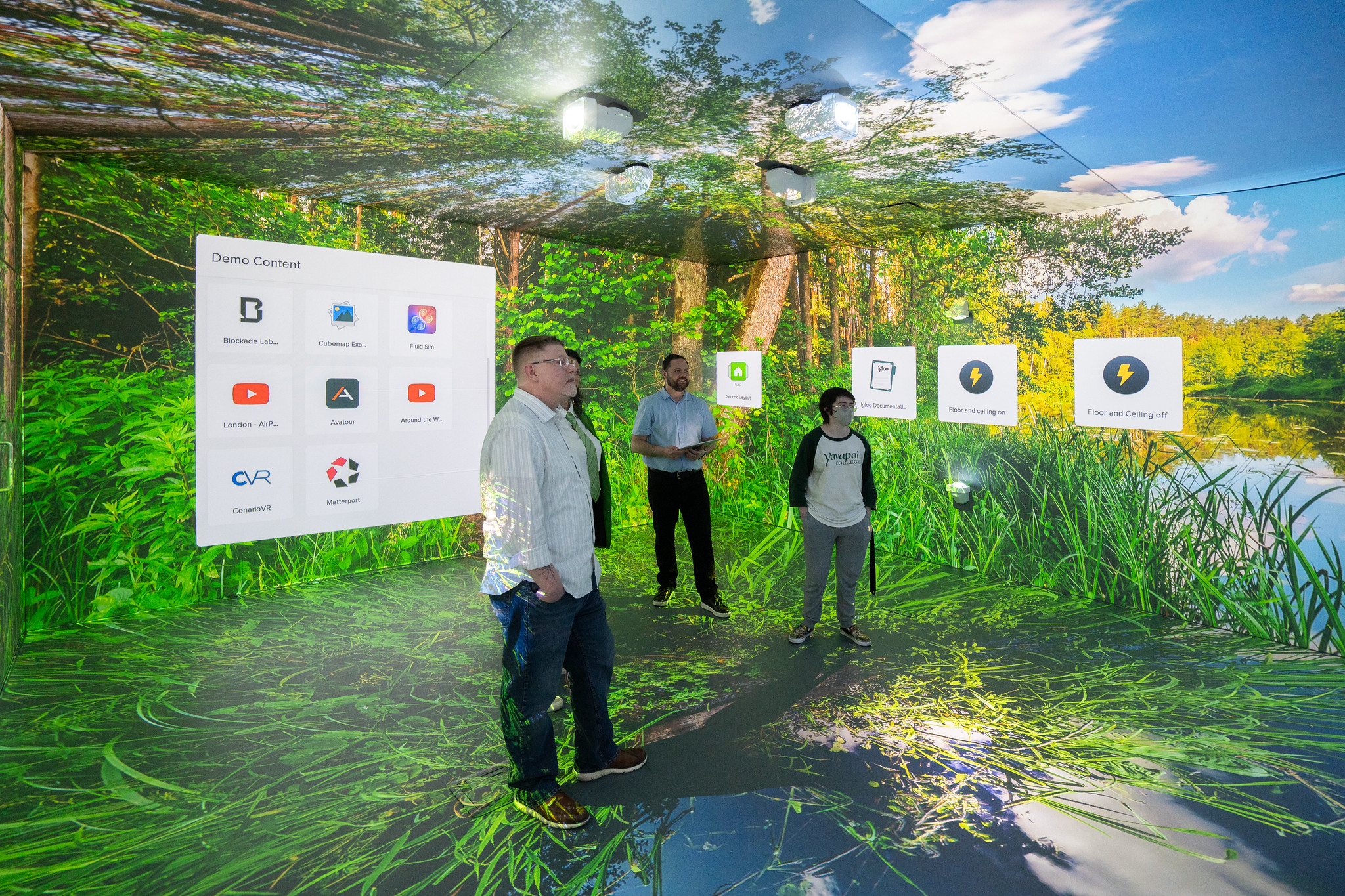
One of the smartest decisions Yavapai made early on was to resist jumping straight into the tech.
Instead, they started with a bigger question: what should learning look like for the next generation of students?
For them, immersive learning wasn’t about creating something visually impressive, it was about supporting a shift towards more practical, skills-based education. As they put it, the focus is moving away from traditional assessments like essays, and towards what students can actually demonstrate in real-world contexts.
That mindset gave the project direction from day one. The technology followed the vision, not the other way around.
Like any institution, Yavapai had to justify the investment. The way they did this is something many universities can learn from.
Rather than pitching the immersive space as a single-use classroom, they identified a wide range of applications before the system was even purchased. In fact, they mapped out several clear use cases from the start.
That insight became central to their internal buy-in. Instead of asking leadership to fund one room, they demonstrated they were effectively creating many. This included teaching, simulations, events, data visualisation, and more, allowing them to show that one space could replace or enhance multiple existing needs. It shifted the conversation away from cost, and towards value.
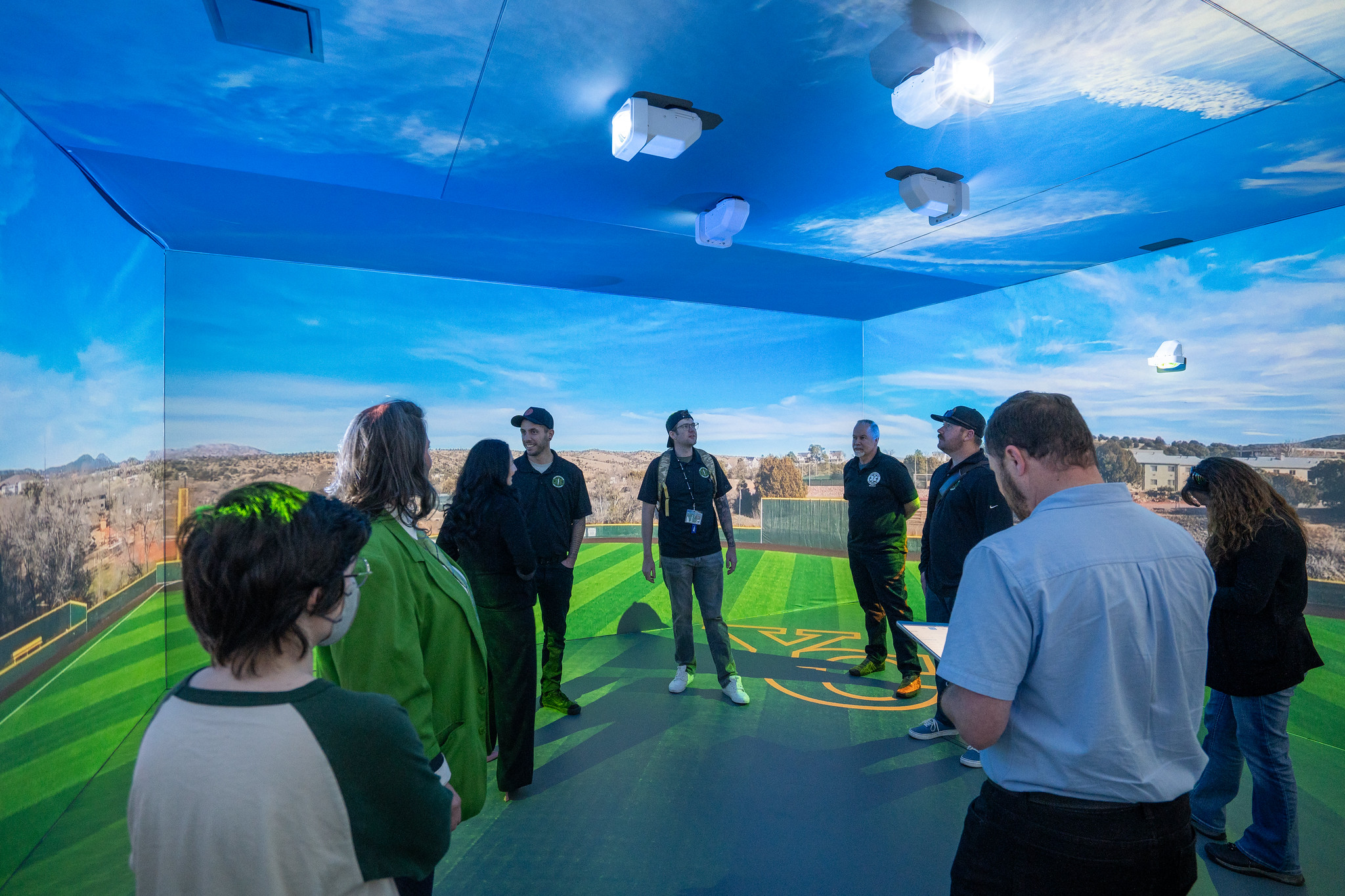
A big reason the space gained traction so quickly is that it wasn’t owned by just one team. From the beginning, Yavapai involved faculty, instructional designers, IT, and leadership in shaping how the space would be used. Importantly, this wasn’t just surface-level input, it was real collaboration, including decisions about priorities and trade-offs.
That approach created a strong sense of ownership across campus. By the time the space launched, people already felt invested in it, and that made adoption far easier. The advice from the team is simple: don’t hold projects like this too tightly. Make it something the whole institution can help build.
One of the biggest barriers to adoption in higher education is complexity. If new technology feels difficult to use, it simply won’t scale.
Yavapai tackled this head-on by making accessibility a priority. The goal was clear: anyone should be able to create content without needing specialist skills. In practice, that meant using familiar tools and simple workflows.
As they put it, if a lecturer can create a presentation, they can create something for the immersive space. That approach dramatically lowered the barrier to entry, and made it far easier for faculty to get involved early, experiment, and build confidence.
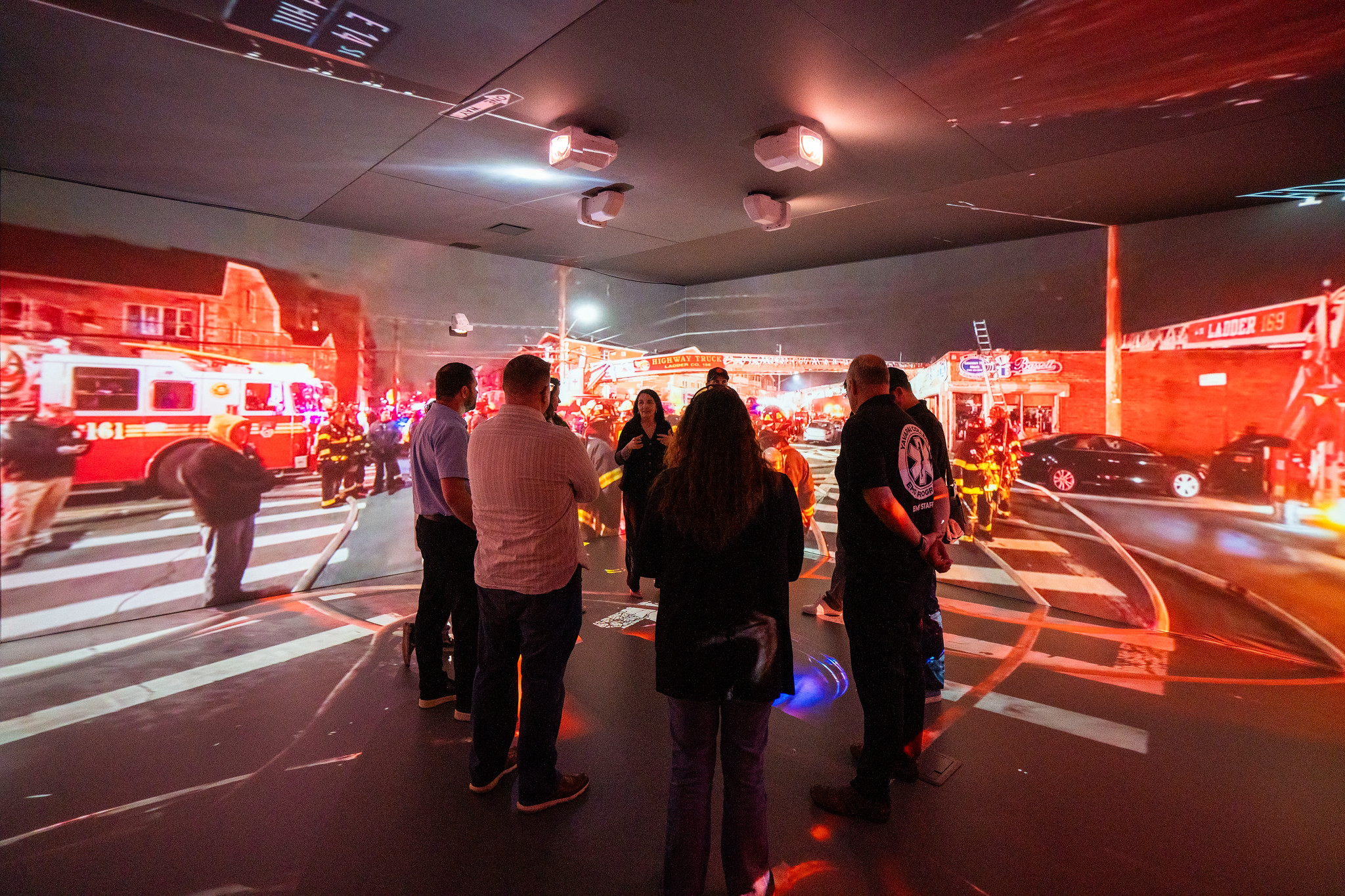
Another important lesson is don’t wait for everything to be perfect before launching. Yavapai didn’t start with highly complex, bespoke experiences. Instead, they began with simple, accessible content, YouTube 360 videos, Google Street View, and presentation-based environments.
This allowed them to quickly show value, spark ideas, and build momentum across the college. From there, things evolved naturally. Over time, the team began developing more advanced applications, including immersive simulations and subject-specific learning environments. The key was starting small and letting creativity grow.
Where immersive learning really comes into its own is in simulating real-world environments, and this is where Yavapai has seen some of the biggest impact. Students can now experience scenarios that would otherwise be too complex, expensive, or even dangerous to recreate physically.
For example, culinary students can familiarise themselves with commercial kitchens, emergency responders can train in high-pressure simulation scenarios, and fire science students can experience incident environments before entering the field. These aren’t theoretical exercises, they’re practical, contextual experiences that help students build confidence and capability before stepping into real situation.
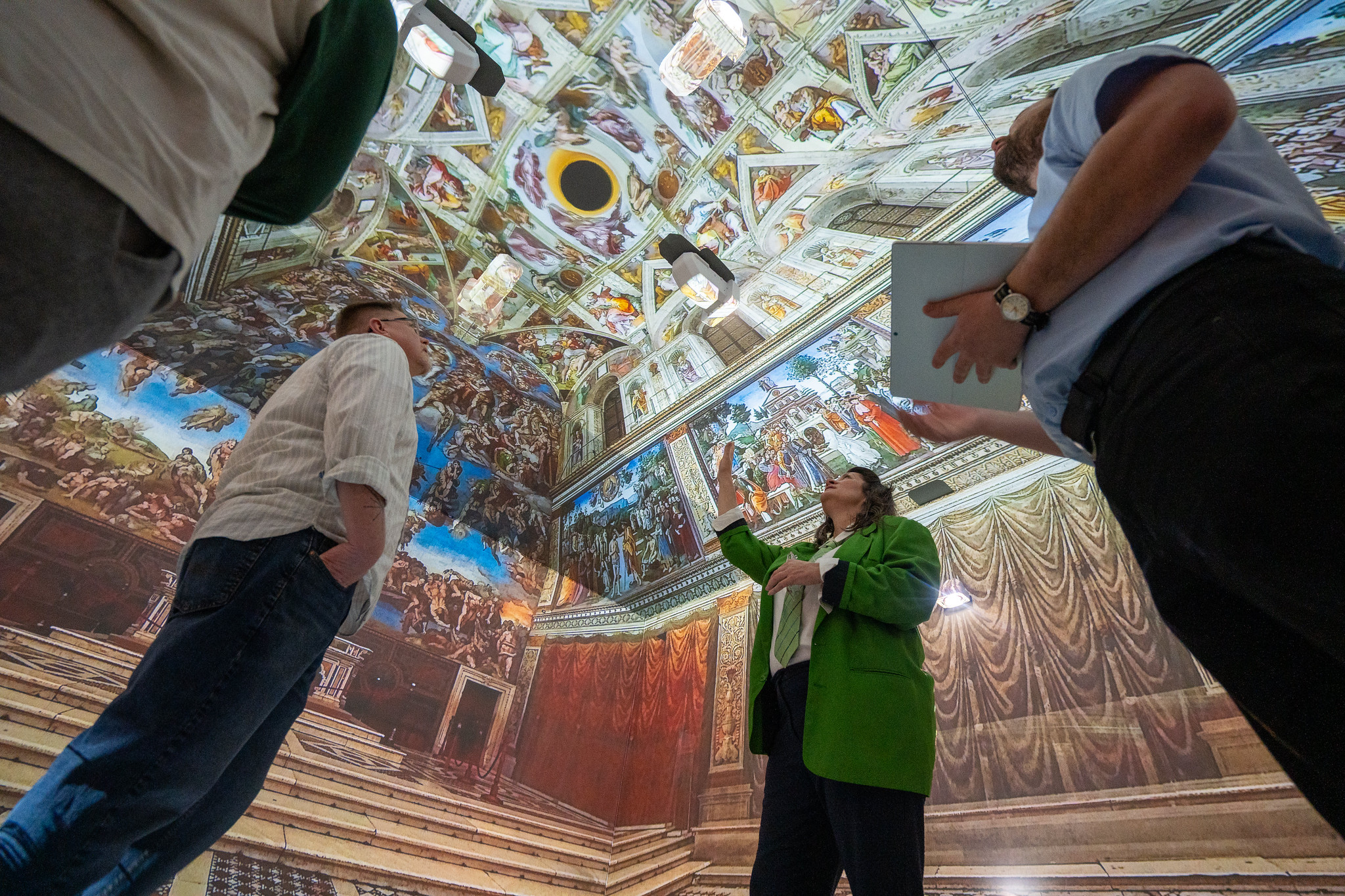
One of the most immediate differences in an immersive environment is how it captures attention. In a traditional classroom, distractions are everywhere. In an immersive space, they largely disappear. The experience surrounds the student, creating a level of focus that’s difficult to achieve through conventional teaching methods. The team at Yavapai described it well, once you’re in the space, the outside world fades away.
This level of engagement isn’t just about keeping attention, it has a real impact on how students process information, particularly in scenarios where they’re reacting, not just observing.
Perhaps the most important takeaway from Yavapai’s experience is that the launch of the space wasn’t the end of the journey, it was the beginning.
Even now, new use cases continue to emerge. Faculty are experimenting, collaborating, and finding new ways to integrate immersive learning into their teaching.
What started with a defined set of ideas has expanded well beyond that, and continues to evolve. That mindset, seeing the space as a platform rather than a one-off project, is what turns immersive learning into a long-term asset.
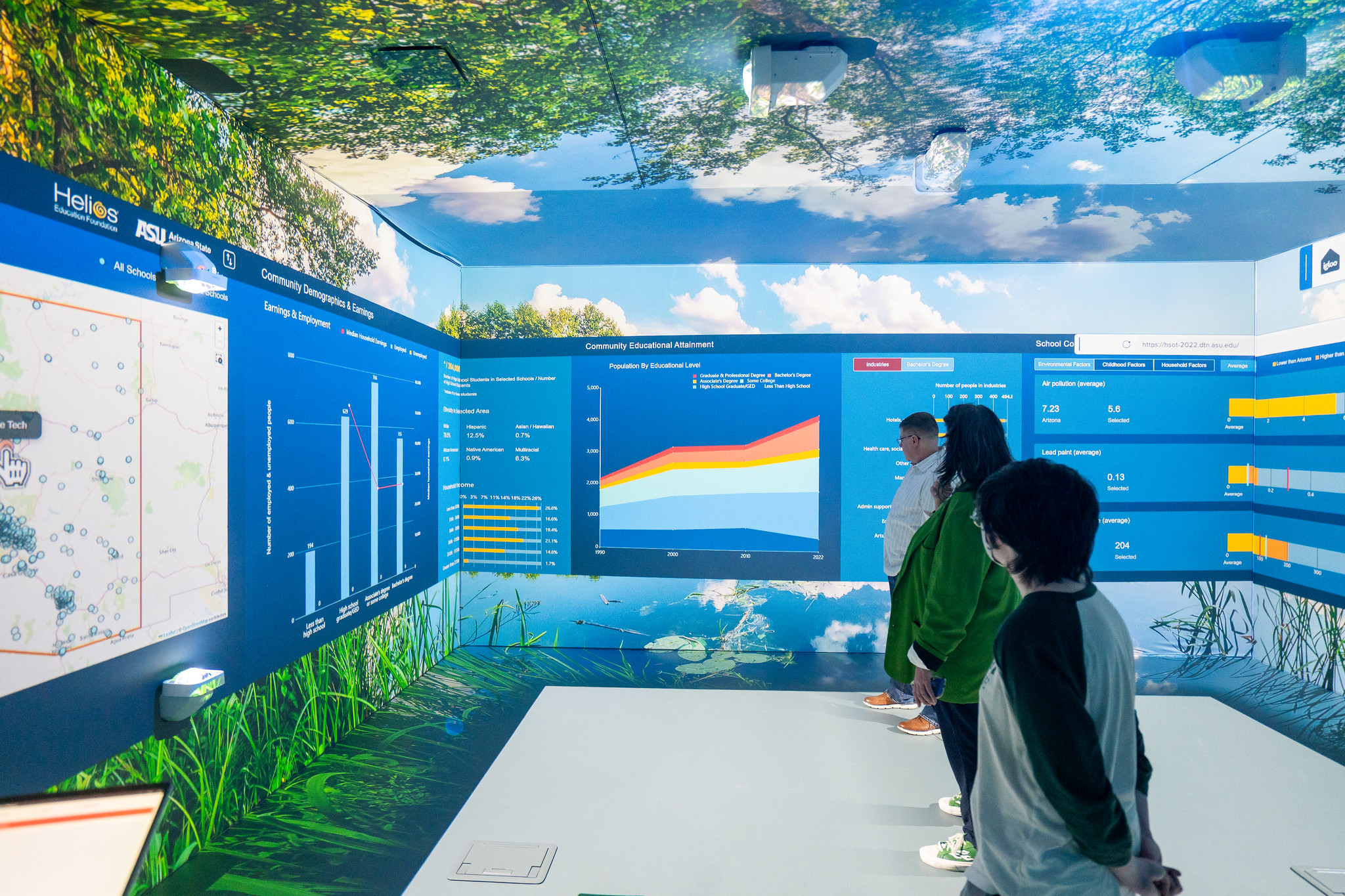
Yavapai College’s experience shows that launching an immersive classroom isn’t about having the biggest budget or the most complex setup, it’s about taking a clear, practical approach from the start.
Focus on what you want to achieve. Bring the right people with you. Keep things simple enough to get started quickly. And then build from there.
Because ultimatley, the success of immersive learning isn't defined by the technology, it's defined by houw people use it.
Get in touch to start your immersive journey
 From watching to doing – how Sunderland College makes immersive learning interactive
 Design the experience, not just the content – lessons from UWTSD
 LASTING System and Igloo Vision sign an exclusive distribution agreement for Southeast Europe
 How Igloo helped deliver narrative gaming experiences at Sheffield DocFest
 Are immersive rooms easy to use?
 The Science of Shared Immersion: Why Shared Experiences are More Impactful
Categories: Education, News
17th February 2023
The big news for Igloo Vision this month has been the release of our new software platform, Igloo Core Engine. You may already have seen on LinkedIn…
20th May 2021
It’s been just over a month since we opened our first demo centre in the Netherlands, at HNK in Rotterdam. The centre was opened to allow more…
1st April 2021
What we thought of as events dramatically changed over 2020. The world had no choice but to pivot to virtual events. Hybrid events have followed. …